
Previous editions of Tuesdays with Coleman have discussed Validate, the audio attribution tool Coleman Insights introduced to the American market last year. This column, however, is not about Validate or why my colleagues and I believe it is the best way to demonstrate the impact of well-executed radio campaigns.
Instead, this column is about attribution tools that fundamentally misunderstand how radio works.
When I demonstrate Validate to potential clients, I often use an example involving a local advertiser that specializes in kitchen renovations—the kind of company you call when you want new countertops installed or your cabinets refaced. This advertiser has used radio successfully for years, running campaigns that last eight weeks or more, several times each year.
Now imagine I’m driving while listening to a local radio station and I hear this advertiser’s commercial. What are the chances that I will immediately pull over, grab my phone, and visit the advertiser’s website?
Pretty close to zero.
And even when I arrive at my destination, it’s still unlikely that I’ll immediately go online and look them up.
But fast forward six weeks. I’m sitting in my kitchen with my wife, and we start talking about remodeling. That’s when I’ll visit the advertiser’s website. Maybe I’ll type the address directly into my browser, or maybe I’ll Google “kitchen remodeling” and choose that advertiser because their name sounds familiar.

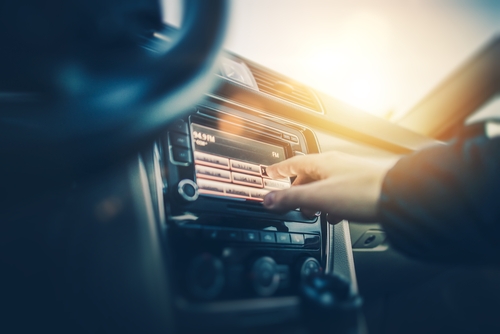
Radio listeners are unlikely to respond within minutes to an ad, particularly for a category like kitchen remodeling. (Photo credit: Shutterstock/Unai Huizi Photography
That familiarity exists for one reason: their radio campaign.
The problem is that many radio attribution solutions will never capture this. Some tools try to measure whether a listener visits an advertiser’s website within minutes of hearing a radio ad. Others attempt to match spikes in website traffic to the exact times radio commercials air.
These approaches may work for certain types of digital advertising, but they are poorly suited to measuring the way radio influences consumer behavior. It has been a long time since I personally sold radio advertising, but even back then, the core principle was clear: radio works by building brands.
As my friend Pierre Bouvard, Chief Insights Officer at Westwood One, often says, great advertising helps brands “become known before they’re needed.”
That idea perfectly captures what radio does best. Radio reaches consumers frequently with a consistent message so that when the moment of need finally arrives, the advertiser’s brand is already top of mind.
That process usually unfolds over weeks—or months—not minutes.
This is not to say radio can’t drive direct response for some advertisers. In certain situations, it absolutely can. But for most businesses, radio’s greatest strength lies in its ability to build familiarity, trust, and preference over time.
Unfortunately, many attribution tools now being marketed to radio broadcasters come directly from the digital advertising ecosystem. That world is built around impressions, clicks, and immediate actions. Naturally, its measurement tools are designed to capture those same outcomes.
But digital attribution tools aren’t built to measure brand building—because brand building isn’t what digital advertising typically does best.
Radio, on the other hand, excels at it.
If the radio industry wants to demonstrate its true value to advertisers, it needs attribution approaches that reflect how the medium works. Otherwise, we risk measuring radio with tools designed for a completely different form of advertising—and inevitably underestimating the impact radio delivers.
In other words, if you want to prove radio works, start by making sure you’re measuring the right things.

I suppose you’re right. Though radio would be wise to aggressively grab a sword and fight for their future – and spend less time justifying its value to advertisers. That’s a weak position.
Show some courage!
Great article Warren. I am using this!
“radio’s greatest strength lies in its ability to build familiarity, trust, and preference over time.”