
Three questions inspired us to launch our latest research project, The Power of Community:
1. Despite being more digitally connected than ever, are Americans lonelier than ever?
2. Anecdotally, we believe podcasting has a superpower when it comes to connection. Is that true?
3. If it is, what can the podcasting industry do to build real engagement and create meaningful change?
The answer to the first question, sadly, is a resounding yes.
Nearly 1 in 5 Americans now report having no close friends. Those under 30 are spending nearly half their waking hours alone—a dramatic change from just a decade ago. And the perception that the elderly are the loneliest is a myth. Consistent with the time-spent-alone findings, it’s people under 30 who are most likely to say they feel isolated from others all or most of the time.
So, what does podcasting have to do with any of this?

Podcasts are fundamentally a one-way medium: you listen to or watch a podcast, and no one talks back to you. That’s different from social media, which is designed to be interactive. And yet, for many people, podcasting feels remarkably two-way.
Nearly half of all podcast consumers agree with each of these statements: “Podcasts keep me company when I don’t have people around,” “Podcasts help me feel connected to something bigger than myself,” and “Some podcast hosts feel like friends.”
Those are powerful statements of connection. And the feelings grow stronger with increased podcast consumption: more than two-thirds of daily podcast consumers agree with all three.
But the story goes beyond the relationship between listeners and hosts.
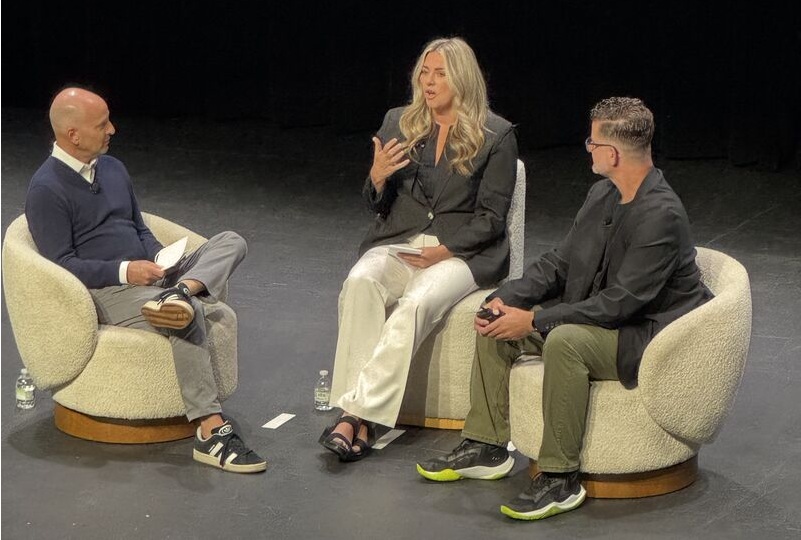
L-R: Carl Weinstein, COO/Locked On Podcast Network; Brittany Clevenger, Sr. Director of Growth Marketing/BetterHelp; Jay Nachlis, VP/Consultant, Coleman Insights
Podcasts often give fans opportunities to engage beyond listening or watching, whether through online chats with other listeners, dedicated communities, financial support, live shows, or meetups. We found that nearly half of podcast consumers have participated in at least one of these activities, rising to almost two-thirds among daily consumers.
Here’s where it gets especially interesting: people who participate in podcast-related community activities are also much more likely to participate in social activities outside of podcasting.
One finding particularly stood out: podcast consumers who participate in a podcast-related community activity are twice as likely to attend a support group or group therapy.
In other words, the connection associated with podcasting may not end when the episode does.
 These are meaningful findings with implications across the podcasting ecosystem.
For advertisers and brands, the research demonstrates that podcasting isn’t just an effective medium for reach—it’s a medium built around connection. Instead of simply buying ads, what if brands helped fund listener meetups or live events? What if they supported causes that matter to the show and its listeners? There may be opportunities to become part of the community rather than simply advertise to it.
For creators, consider tangible ways to encourage listener-to-show and listener-to-listener participation. Use language that reinforces community—words like “we,” “us,” and “together.” Develop inviting, show-specific phrases, traditions, or rituals that regular listeners can latch onto and that help them feel like part of something.
Because if podcasting has a superpower, our research suggests connection may be it.
And we’re just getting started. We’ll be sharing many more findings from The Power of Community, along with details about an October webinar presented in conjunction with Sounds Profitable.
