As a big soccer fan, I was intrigued when I learned that Firefox had become the front-of-shirt sponsor for Wrexham AFC.
Yes, that Firefox. The web browser.
At first glance, a web browser sponsoring a Welsh football club seems like an odd pairing. But as I learned more about the partnership, I realized there’s an interesting branding lesson here, especially for anyone in the radio business.
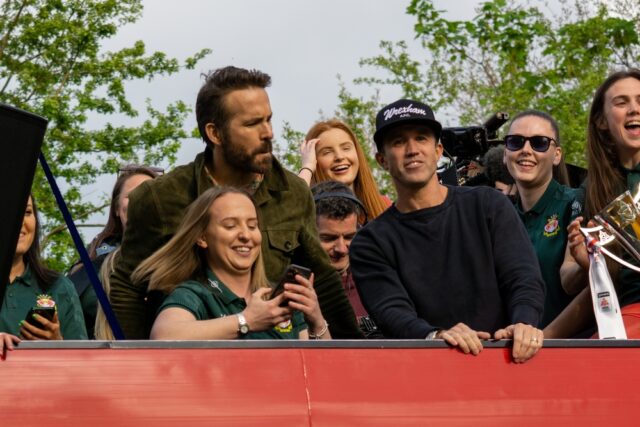
For those who haven’t followed the story, Wrexham is one of the oldest professional football clubs in the world. After years of struggles in the lower reaches of English football, actors Ryan Reynolds and Rob Mac bought the club in 2021. Their ownership, combined with the enormous success of the television series Welcome to Wrexham, transformed what had largely been a local and regional brand into a global one.

Rob McElhenney, Ryan Reynolds at the FX’s “Welcome To Wrexham” FYC Event at Chloe’s at Golden Road Brewing on April 28, 2026 in Burbank, CA (Kathy Hutchins / Shutterstock.com)
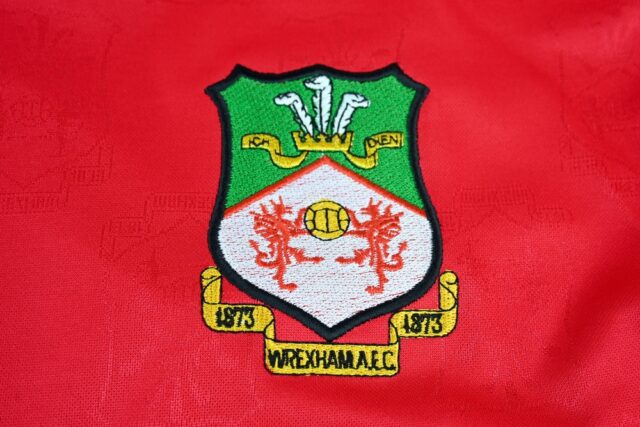
After an unprecedented three consecutive promotions, Wrexham now plays in the Championship, the second-highest level of English football. And beginning with the 2026-27 season, Firefox became the front-of-shirt sponsor for both Wrexham’s men’s and women’s teams.
So, why Firefox?
According to StatCounter, Google Chrome accounts for roughly two-thirds of worldwide web browser usage. Safari is a distant second, followed by Microsoft Edge. Firefox’s share is less than 3%.
In other words, Firefox is an underdog—and so is Wrexham.
Mozilla, the organization behind Firefox, clearly sees the connection. In announcing the partnership, Mozilla described Firefox and Wrexham as two “challenger brands” that have built passionate communities by doing things differently. That makes a lot of sense from a positioning standpoint, but I think there’s something even more interesting about this sponsorship.
Firefox may or may not have a product problem with some consumers. But it almost certainly has an awareness and consideration problem.

Editorial credit: Bangla press / Shutterstock.com
Think about what happens when you get a new computer or phone. There’s already a browser on it. Chrome dominates Android. Safari comes with Apple products. Edge comes with Windows. Most people probably don’t conduct an exhaustive evaluation of browsers before deciding which one to use. They use what’s already there or perhaps download the browser they already know and use elsewhere.
That means one of Firefox’s biggest challenges is simply getting into consumers’ consideration sets. And that’s something we think about all the time in the research we conduct for our radio clients.
We can ask listeners to rate a station’s music, personalities, morning show, or other content. We can help the station refine all those things. But none of that matters very much if, when someone decides, “I want to hear some Hip Hop,” your station never enters their mind.
That’s why we measure Awareness and association with brand images in our Plan Developer perceptual studies. What brands come to mind? A radio station, for example, can have a terrific product. It can conduct music research, improve its morning show, reduce commercial clutter, and make its app work beautifully. But if consumers aren’t thinking about the station, they can’t choose it.
Firefox appears to understand that. And that helps explain why putting its logo on a football shirt potentially makes more sense than spending the same money telling people about browser features.
Wrexham has something Firefox needs: attention.
And it isn’t just attention in Wales. Welcome to Wrexham has given the club a worldwide following that wildly exceeds what you would expect for a football club from a small city in North Wales. Wrexham now attracts interest throughout the United Kingdom, the United States, Canada, Australia, and elsewhere. Every match, every highlight, every social media post, and every photograph of Reynolds and Mac celebrating another milestone puts Firefox in front of people who might otherwise have little reason to think about a web browser.
Importantly, the partnership also reinforces an image Firefox wants to own. Firefox isn’t going to beat Chrome by claiming to be the biggest browser because, obviously, it isn’t. Instead, it can stand for something different: independence, privacy, user choice, and taking on the giants. Wrexham’s brand story fits that narrative remarkably well.
Here’s where I think the lesson becomes especially relevant to radio.
When budgets get tight, marketing is often evaluated almost entirely through short-term response. How many people clicked? How many people downloaded the app? How many people entered the contest? Did ratings go up?
Those are perfectly reasonable questions. But they can lead us to undervalue one of marketing’s most important jobs: building and maintaining mental availability. Sometimes marketing works because six months from now, when someone has a need your product can fulfill, they think of you.
That’s much harder to attribute. If Firefox’s market share increases over the next few years, nobody will be able to calculate precisely how much of that growth came from someone repeatedly seeing the logo on a Wrexham shirt. That doesn’t mean the exposure didn’t matter.
The same is true for radio. The billboard someone passes every morning may not cause them to listen at that moment. The television commercial featuring your morning show may not generate an immediately measurable streaming session. The sponsorship of a community event may not produce a detectable ratings spike. But each can help build an image and, perhaps most importantly, keep the brand mentally available.
Of course, awareness alone isn’t enough. Once consumers try Firefox, the product must deliver. Once someone samples your radio station, the content must deliver. That’s why we’ve long preached at Coleman Insights that successful radio brands need both brand strength and content strength.
But we shouldn’t confuse the two.
A better product doesn’t automatically create a stronger brand. Sometimes you must give people a reason to notice you in the first place.
For Firefox, apparently, that means putting its logo on the front of a football shirt in Wrexham, Wales.
The more I think about it, the less strange that seems.