

In the music industry, “brand” is often reduced to visuals, slogans, or social metrics. However, in folk music—where authenticity is currency and storytelling is a strategy—brand is built on a deeper level. The careers of Phil Ochs, Todd Snider (who passed away at 59 late last year), and Jesse Welles offer a powerful longitudinal study of brand development across three eras of American culture and media.
For media professionals, these artists illustrate how brand identity adapts to shifting political climates, distribution channels, and audience expectations while preserving core values.
Phil Ochs: Building a Brand on Moral Authority
Phil Ochs didn’t just write topical songs—he branded himself as a truth-teller during one of the most turbulent media eras in American history. His career highlights how a personal brand can align with macro-level cultural narratives.

American songwriter Phil Ochs (By Kenneth Tash – Own work, CC BY-SA 4.0, https://commons.wikimedia.org/w/index.php?curid=45279711)
Brand Strategy: Positioning as “The Singing Journalist”
Ochs came into the early 1960s folk revival with a background in journalism. Instead of leaning into the abstract poeticism of his peers, he doubled down on reportage-style songwriting. This strategic differentiation made him instantly recognizable:
- Niche Ownership: He dominated the topical protest category by naming specific events, politicians, and injustices.
- Brand Consistency: Whether on stage, in interviews, or on album covers, Ochs delivered a clear persona—idealistic, articulate, morally uncompromising.
- Emotional Branding: His audience bought into not just his songs, but his values. He essentially became a trusted media source.
For media professionals, Ochs demonstrates the power of value-forward branding—a brand that leads with conviction, clarity, and a pointed editorial stance.
Todd Snider: The Anti-Brand as Brand
When Todd Snider emerged in the 1990s, the cultural context had changed. Audiences were increasingly cynical about political messages but hungry for authenticity. Snider filled the gap by flipping the concept of branding on its head.
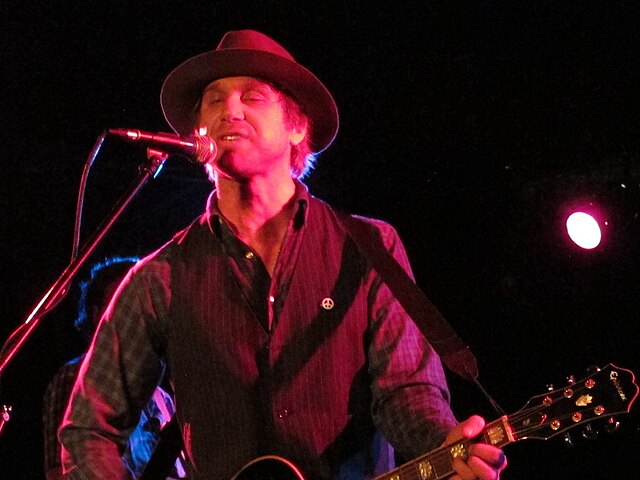
American singer-songwriter Todd Snider (Wikimedia Commons, Jester Jay Goldman)
Brand Strategy: Radical Informality
Snider’s entire brand is built on being the unbranded artist:
- The Barstool Storyteller Persona: His persona—rambling, barefoot, and witty—communicates informality as a calculated brand position.
- Humor as Differentiation: Where Ochs used moral force, Snider uses satire and self-deprecation, making both him and his commentary more accessible.
- Community Branding: Snider’s association with East Nashville’s songwriter scene reinforces his identity as a champion of misfits and outsiders.
This is an example of anti-brand branding—a strategic rejection of polish that becomes its own recognizable signature.
For media professionals navigating the “authenticity economy,” Snider shows how embracing imperfection can become a competitive advantage, especially when appealing to audiences skeptical of anything overly curated.
Jesse Welles : The Modern Digital-Era Folk Brand
Jesse Welles represents the evolution of folk branding into the algorithmic, platform-driven media world. His brand is both visually cohesive and emotionally intimate, designed for an era where music discovery happens through digital touchpoints long before audiences attend a concert.

Jesse Welles at NYC’s Bowery Ballroom, 2025 (Wikimedia Commons, Justin)
Brand Strategy: Cinematic Vulnerability
Welles’ brand blends classic folk values with contemporary digital aesthetics:
- Emotional Transparency: Welles’ lyrics favor vulnerability and introspection—an approach aligned with today’s audience desire for emotional resonance over political messaging.
- Minimalist Visual Identity: His photography, album art, and online presence use muted tones and clean composition, creating a sophisticated, modern-folk aesthetic that stands out in a crowded feed.
- Platform-Native Branding: Welles understands that digital-native audiences expect authenticity and aesthetic coherence. His brand meets both needs with precision.
For media professionals, Wells exemplifies how modern artists must balance craft, storytelling, and visual consistency, not just through albums but across every digital point of contact.
Connecting the Lineage: Lessons for Modern Brand Builders
Across three generations of folk musicians, consistent themes emerge—each adapted to its era’s technological and cultural environment.
- Values Are the Bedrock of a Lasting Brand
- Ochs led with moral clarity.
- Snider led with lived empathy and humor.
- Welles leads with emotional honesty.
Each artist built trust by being unwaveringly aligned with their core truth.
- Authenticity Must Be Contextual, Not Static
Authenticity is not a fixed aesthetic—it is a responsive relationship with the zeitgeist:
- In the 1960s, authenticity meant activism.
- In the 1990s, it meant relatable imperfection.
- Today, it means vulnerability and transparency.
The lesson: authenticity evolves with audience expectations.
- Strong Brands Occupy a Distinctive Emotional Territory
Each artist carved out an emotional niche:
- Phil Ochs → righteous urgency
- Todd Snider → irreverent warmth
- Jesse Welles → quiet introspection
Effective brands win not by appealing to everyone, but by owning a unique emotional lane.
- Medium Shapes Message, and Message Shapes Brand
Each artist’s branding strategy matches the dominant distribution channels of their era:
- Ochs: protest rallies, print media, live performance circuits
- Snider: radio, touring circuits, spoken-word storytelling
- Welles: streaming platforms, social feeds, mood-driven playlists
Successful branding aligns with how—and where—audiences consume media.
Conclusion: A Playbook for the Next Generation of Media Brands
Phil Ochs, Todd Snider, and Jesse Welles form a lineage of artists who used their music not just to entertain but to embody an identity. For media professionals, their careers reveal that powerful brands are built on:
- Clear values
- Emotional specificity
- Contextual authenticity
- Medium-aware storytelling
In a world saturated with content, these principles are timeless. Brands that master them don’t just reach audiences—they resonate across generations.
