Tag Archives: Integr8 Research

The Rise of the Superhit

Turn on your local hit music station right now. There’s a good chance you’ll hear a song from the last decade.

Sure, there’s consensus that new music is in a rut. (We explained why new music won’t suck forever in our previous post.) While we’ve seen plenty of new music slumps come and go at predictable intervals in the past, there’s a new phenomenon we’re seeing this time around.

Enter the Superhit.

A superhit is a hit that seems to stay a hit forever. From Ed Sheeran’s “Shape Of You” to Dua Lipa’s “Levitating,” these songs stick around a lot longer than we’ve seen songs last in the past.

It’s not your imagination that these superhits were not a thing until recently.

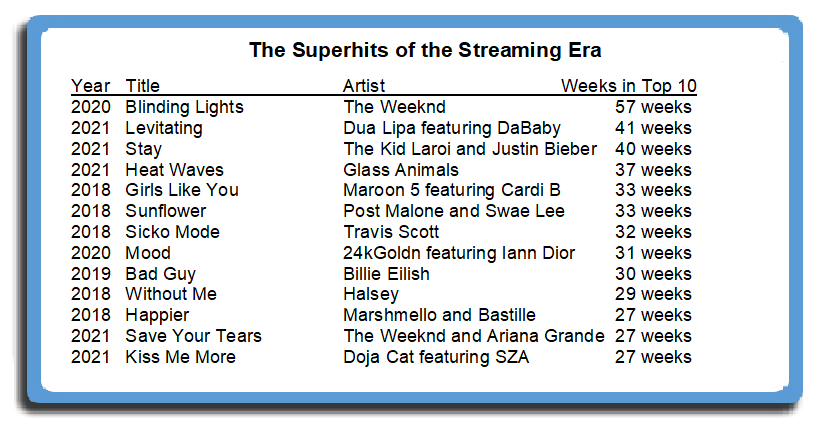
A superhit—for our comparison purposes—is a song that remains in the Billboard Hot 100’s Top 10 for more than 26 weeks. Before 2010, only one song ever stayed among the chart’s elite for over half a year:  1997’s “How Do I Live” by LeAnn Rimes, which lingered in the Top 10 for 32 weeks.

Starting in the 2010s, however, three superhits emerged:

  • 2011’s “Party Rock Anthem” by LMFAO ft. Lauren Bennett and GoonRock (29 weeks)
  • 2014’s “Uptown Funk” by Mark Ronson featuring Bruno Mars (31 weeks)
  • 2016’s “Closer” by The Chainsmokers featuring Halsey (32 weeks)

Then in 2017, the floodgates opened for the superhit. That year alone, three songs stayed Top 10 for 27 weeks or more:

  • “Shape of You” by Ed Sheeran (33 weeks)
  • “That’s What I Like” by Bruno Mars (28 weeks)
  • “Perfect” by Ed Sheeran (27 weeks)

Since then, 13 songs have become superhits from 2018 to today.

What changed?

Has new music been so bad lately that listeners are holding on to these big hits?

Is radio no longer considering burn scores to move big hits out of heavy rotation?

Is the TikTok generation less interested in contemporary music as they resurrect everything from Kate Bush to Edison Lighthouse?

You’re overthinking it.

The superhit is a direct result of streaming—specifically—the way streaming measures music appeal differently than we used to measure it:

Before streaming, our understanding of what songs people loved most stemmed from the music they bought and the songs they heard on the radio.

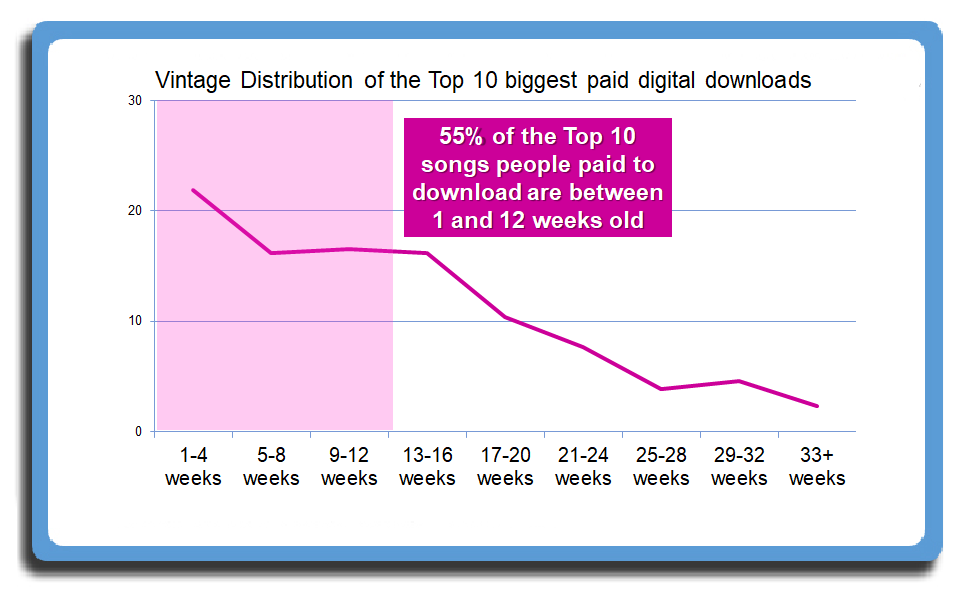
Vintage Distribution of the Top 10 Paid Digital Downloads

  • Music sales is inherently front-loaded—that is, the top 10 best-selling songs tend to peak when they debut, and most songs are no longer top 10 in sales after 12 weeks. That pattern has remained remarkably stable from 45s through Cassingles to iTunes downloads. Why? People who already bought a song may continue listening to it for months—even years—but once new listeners stop buying a song, that song no longer charts.
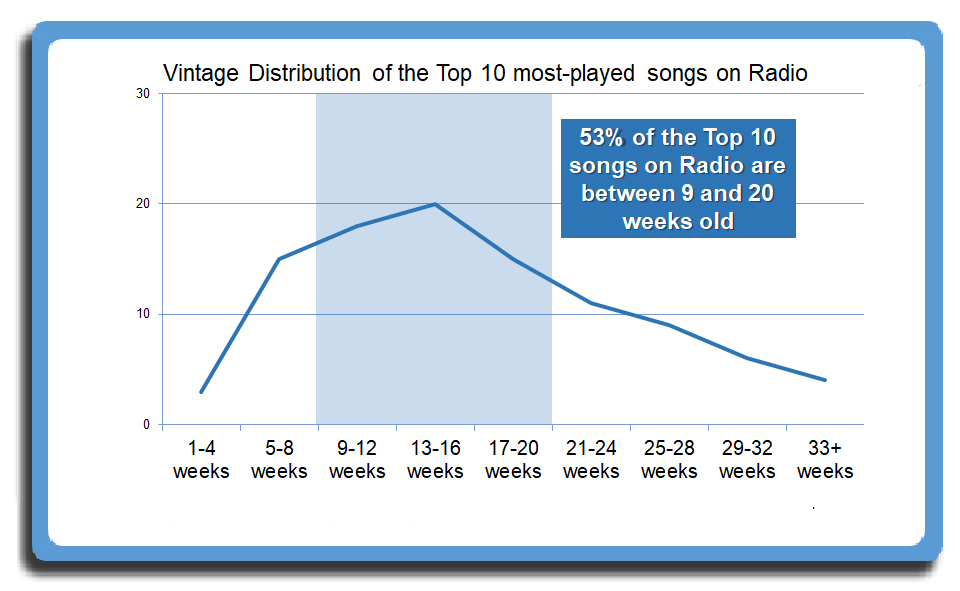
  • Radio programmers, mindful that some listeners get tired of hearing months-old songs all the time, have historically moved songs to a lower-rotation recurrent category by the time songs are 26 weeks old. Such songs might still be the station’s best-testing songs in callout, but because stations air them less frequently, they’re no longer among the 10 most-played songs on the radio once stations move them to recurrent.\

Vintage Distribution of the Top 10 most played songs on US radio

This combination of sales being intrinsically front-loaded and radio backing off songs to avoid burning out listeners means, historically, songs simply didn’t stay in Billboard Hot 100’s Top 10 for more than 26 weeks.

Until Streaming.

The two fundamental changes that streaming data introduces are

1) Plays, not people: Streaming measures how many times a song plays, not how many different people play a song,

2) Streaming includes active and passive consumption: Since people use streaming like a record store and like a radio, it mixes together both the active consumption we used to measure through song sales and the passive fandom we used to chart through radio airplay.

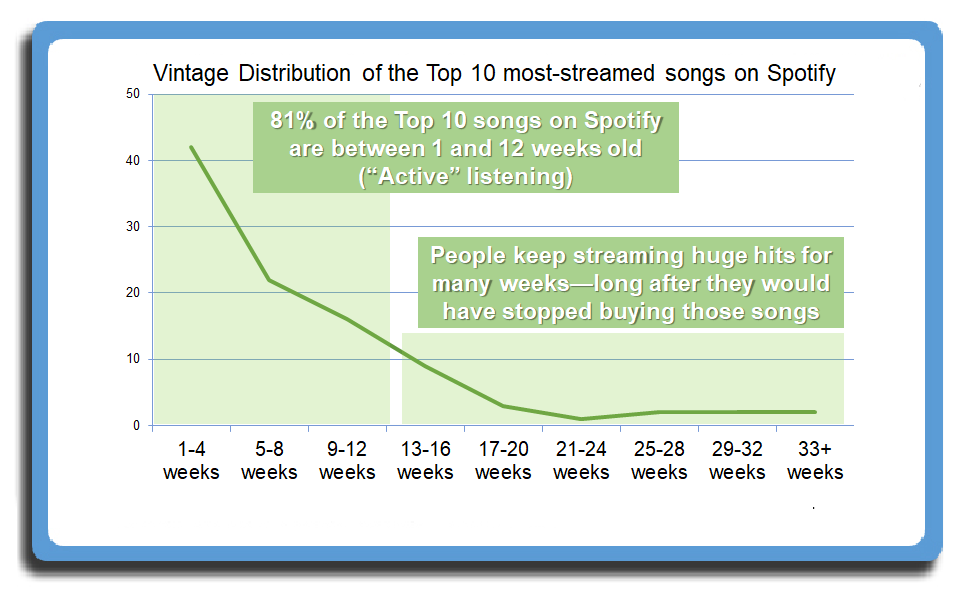
Just like radio listeners, streaming users also get tired of hearing hit songs over and over again at some point. At some point, even the most massive hits will receive a few fewer plays with each passing week. As long as enough people still play a song often enough, that song will remain among the most-streamed songs.

The Vintage Distribution of the Top 10 Songs on Spotify

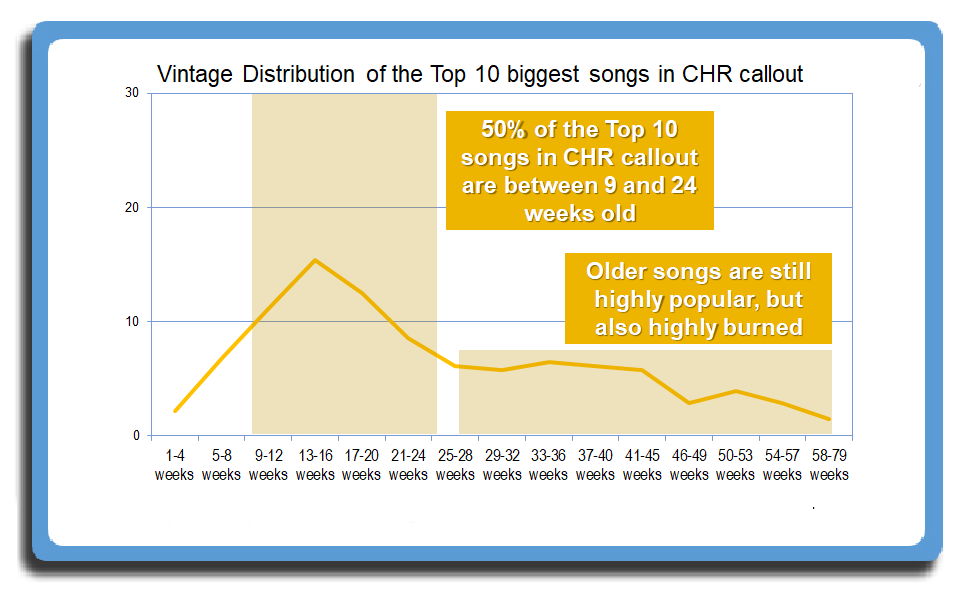
The superhits that people keep streaming week after week are usually also the songs listeners keep rating among their favorites in radio stations’ callout research week after week. Such songs existed long before the advent of streaming.

The Vintage Distribution of the Top 10 most popular songs in CHR callout research

So why did the superhit explode in 2017?

Streaming plays were already a part of the Hot 100 metric starting in 2007. This change came during the digital download era. While “Party Rock Anthem” and “Closer” achieved superhit status due to heavy consumption on streaming, iTunes sales were still bigger than Spotify.

As 2017 became 2018, streaming overtook paid digital downloads as the dominant way consumers accessed new releases.

In some cases, a song became a superhit by being big with different audiences at different times.

  • Billie Eilish’s “Bad Guy” spent months topping streaming charts before radio embraced the song and made it a hit with a broader audience for even more months.
  • “Heat Waves” by Glass Animals was huge among alternative fans before catching on with mainstream pop fans.

In most cases, however, the superhits are simply songs that a lot of people like and keep enjoying for a long time. It’s no surprise that almost all the superhits this century have been mainstream Pop, Pop Dance, Rhythmic Pop or Pop Hip Hop titles.

Superhits of the Streaming Era

Such songs always existed. Until streaming gave us a way of measuring which songs people play when they’re in control of their music, however, we had no way of capturing them.

Had we magically possessed a way to gauge which songs people played from vinyl back in the day, we almost certainly would have uncovered many more superhits.

Five takeaways for radio…

1) Superhits always existed. We simply had no way of gauging which songs listeners still played for themselves for many months until streaming replaced buying music.

2) The biggest hits appeal to lots of people. For decades, experts have declared that fragmented music tastes would completely kill mass appeal. While the monoculture of the three-TV channels era is over, the extinction of the mass appeal hit in favor of the long tail simply has not happened. The songs that endure month after month do so because they appeal to a wide coalition of different people.

3) Burn is still a thing. For streaming services, people who have grown tired of a song aren’t a problem. They simply move on to songs they find more compelling. So long as enough listeners are not sick of hearing a song, it remains big. In radio, however, haters matter. Whether it’s because they’ve grown tired of a song or never liked it in the first place, haters change the station.

4) Timeliness still matters: Listeners may still personally love a song that’s over a year old. They may not even report being tired of it. If your radio station is in a currents-based format, however, your listeners expect your station to keep them on top of what’s happening right now in music. Keeping songs in heavy rotation for 18 months might not annoy your listeners in the moment, but it may undermine their perception that your radio station is on top of what’s happening today.

5) Using streaming data like other metrics is dangerous. As we outlined extensively, you have to learn new benchmarks for gauging songs’ streaming data because streaming measures song plays and because streaming mixes listening from both active and passive fans. How we measure music consumption is changing dramatically. People’s relationship to recorded music, however, remains remarkably unchanged.

Finally, is there a way you can spot a future Superhit early in its life? The biggest clue is that when listeners start streaming it, they don’t stop: Unlike most songs, superhits tend to cool off in streaming plays much slower than songs that follow traditional timelines. Ultimately, however, even if a song isn’t destined to be a superhit, if it’s a big hit today, you should play it today.

Why New Music Won’t Suck Forever

New music sucks. The experts agree.

Has western civilization finally decided we’ve written every song worth singing?

I personally love a lot of music I’m way too young to know, much less enjoy. I’ve also mercifully avoided the trap of many music fans in the dad rock demographic of hating my kid’s music.

When your Billie could be Holiday or Eilish, you notice patterns.

Here’s why today’s slump in new music is not only totally predictable, but also totally temporary.

1) Millennials are too old, while Gen Z is still too young, to influence new music trends

First, let’s clear up some oft misquoted generational nomenclature.

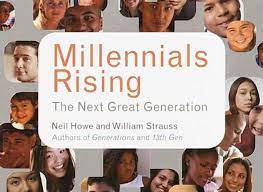
  • Those 20-somethings some folks call Generation Z are in fact last-wave Millennials. According to Neil Howe, whose seminal works on generational theory coined the term “Millennial”, Millennials are now 18- to 40-years old.
  • The next generation—Gen Z—is now 17 and younger. The youngest Millennials are in college. The oldest Gen Zers are in high school. (Don’t argue with me; argue with Neil).

Millenials Rising

Historically, when the split between an older and younger generation is between ages 16 and 21, new music really sucks.

  • Remember the early 80s, when Christopher Cross and Urban Cowboys passed for Top 40’s biggest hits before MTV brought New Wave into our lives? That period was when the oldest Boomers were in college and the youngest Xers were still in high school. In just a couple of years, as the Xers gained enough influence over which songs became popular, CHR entered a golden age with Michael Jackson, Prince, Madonna, Duran Duran, and all those British new Romantics.
  • Fast forward to 2000 and the groundbreaking Grunge and Alternative Rock of a decade prior had devolved into Vertical Horizon’s “Everything You Want” and Matchbox twenty’s “Bent”. Shortly thereafter, however, Millennials would transform Generation X’s dark alternative into My Chem emo and Hip Hop (Gen X’s other musical creation) from songs of grim reality to anthems of club nirvana.
  • Then there was the early 1960s, after Rock ‘n’ Roll’s original heroes died, but before the Beatles invaded. That era of novelty songs, cheesy dances, and death discs happened while the Silent Generation of Elvis had left the malt shop for work, while the Woodstock Boomers were still in middle school.

We’re now exactly where we were during those times, except now it’s the aging Millennials ceding control of popular music, while Gen Z prepares to change the direction of music tastes. As I noted in How The Homelanders Will Soon Change Popular Music we can expect the extroverted, community-oriented party of the 2010’s biggest EDM-fueled hits to give way to quieter, more introspective, yet inclusive styles of music.

While we’ve already heard examples of hits that have these attributes, don’t expect a wholesale mainstream new music evolution until today’s high school seniors turn 21 in  2026—give or take a year or two.

2) Teenagers enjoying older music is not abnormal

Many music pundits observe that today’s teenagers, who now enjoy unprecedented access to the full history of recorded music, are routinely embracing songs decades older than they are.

There’s Kate Bush and Stranger Things.

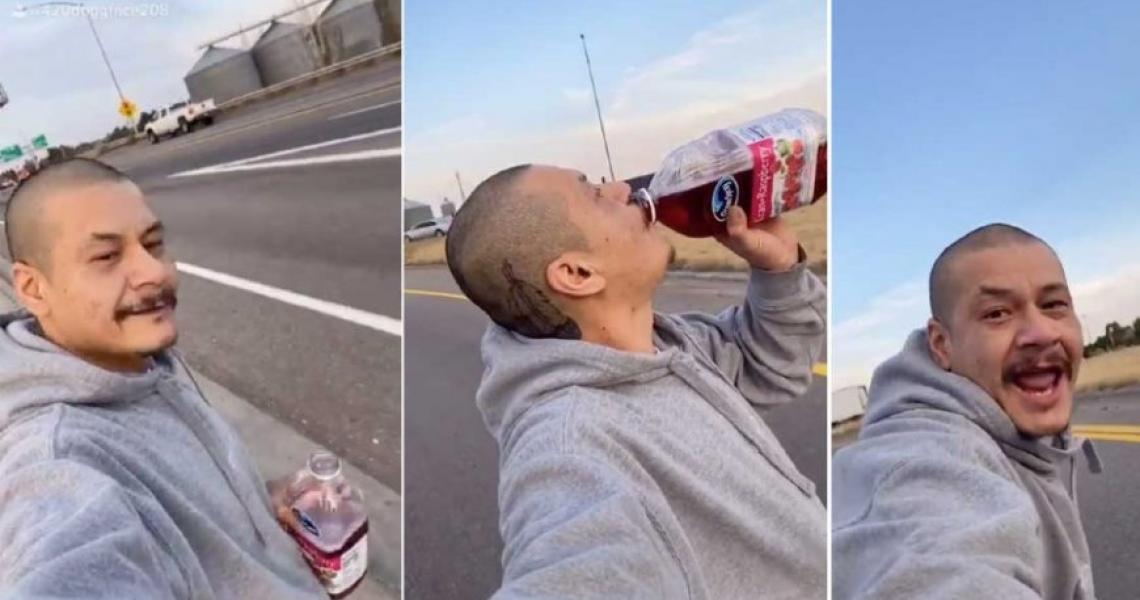
There’s that TikTok Skateboard dude who brought back Fleetwood Mac’s Dreams.

TikTok Skateboard Dude listening to Fleedwood Mac's "Dreams"

My own teenager was recently listening to Sly and the Family Stone’s “Everyday People.” “Everyone knows this song, dad,” I was sarcastically informed when asked how they knew a song that was already an oldie when I was a teen.

Some cite this strong interest in older songs as a sign new music just doesn’t cut it.

The thing is, today’s teens aren’t actually that unusual for enjoying older generation’s music.

In the 2000s as the iPod was the hottest way to enjoy one’s music collection, a study found then-millennial teenagers’ iPod collections overlapped with their parents’ tunes by 40%.

Many of my fellow Xers spent the late 80s with Pink Floyd, Led Zeppelin, Rush, The Doors and other pantheons of Classic Rock.

So, if Gen Z, Millennials, and Gen Xers all listen to the music of older generations, where did this notion that young people only listen to new music materialize?

Boomers.

Hippies at Woodstock 1969

The generation that spawned Beatlemania, went to Woodstock, and fueled Studio 54 is the generation famous for not trusting anyone over 30. Do you think they’d be caught dead listening to the squares’ Big Bands and Standards?

Surely there was some teenager in 1966 who loved Jerry Vale, but he kept that dark secret.

The same was not true of their older brothers and sisters. Those Silent Generation teens who made superstars of Elvis, Fats Domino, and The Platters were often buying records that were remakes of 30-year-old songs.

Ironically, the boomers who wouldn’t be caught dead listening to “old” music are—as elders—listening with fresh ears to their parents’ music.

Speaking of Boomers…

3) New music’s most vocal critics simply aren’t in the demo.

“The thing I just don’t like about Rock ‘n’ Roll is the drums,” my grandfather told me back in the 80s. “All I can hear when I hear it is boom boom boom boom.”

A WWII veteran, he spent his formative years with the Big Band and melodic standards of the 1930s and 1940s. He didn’t begrudge his baby boomer kids’ love of rock ‘n’ roll. He just knew it wasn’t for him.

Now those boomers, raised on 60s Oldies and 70s Classic Rock, are the grandfathers. And frankly, some need to extend the same courtesy and awareness to younger generations as my grandfather extended them.

The fact is, most new music is for 17-year-olds, not 57-year-olds.

There’s plenty of exciting new music in 2022. However, it’s impacting among youth subcultures outside the mainstream that middle-aged music fans wouldn’t notice.

Meanwhile, those same teenagers discovering Kate Bush and Queen also enjoy Kendrick Lamar, Joji, Bad Bunny, and Harry Styles (except my kid, who hates Harry Styles.)

How should you program until new music rebounds?

If you’re responsible for a contemporary station, it’s likely little comfort that renewed excitement for new music is only a few years away. In the meantime, here are four tips to maximize your audience during the slump:

1) Keep a healthy diet of conservative consensus hits on your playlist. These songs may induce cringe in future years, but now represent the best way to satisfy a broad audience’s appetite for current music. However, understand that exclusively focusing on those adult-friendly pop titles can destroy your station’s relevance tomorrow

2) Add a few carefully selected “out there” songs for spice that might alienate older listeners. Be on the lookout for songs that garner significant streaming among young people, especially among youth subcultures. These songs are “image” songs. Play them not for their widespread appeal, but instead to position your station as culturally relevant and give your station the cache to pivot when popular music evolves. While you should give significant exposure to these image titles, only one or two such songs should be on your playlist at any given time.

3) Keep culturally relevant musically, even if it’s confusing. When a song becomes a cultural touchpoint, such as “We Don’t Talk About Bruno” or “Running Up That Hill,” embrace that moment immediately. Instruct airstaff to explain why these songs are having a cultural moment for those listeners too busy to notice cultural trends. Do not expect these songs to follow the traditional arc of song development seen in callout research—by that time their cultural relevance is over. Finally, don’t expect these songs to sound like the rest of your playlist.

4) Keep your ears open for what’s next. Tomorrow’s trends in hit music always trace their roots back to underground music among youth subcultures. Those uncool goth kids in the 80s gave us alternative in the 90s. Those 00s kids who were into Skrillix and DeadMau5 spawned the EDM-infused pop hits of the 10s. Indie artists such as Mitski or Caveman or comedy YouTubers such as Danny Gonzalez may or may not signal what’s next, but they do have rabid Gen Z fans today. While it’s too early to base your station’s playlist on these youth trends, understanding them today will prepare you to pivot your station when the next evolution in new music goes mainstream.


How to Spot the Real Hits in Streaming Data

Streaming data ought to be the best music popularity measurement ever created. After all, it shows us which songs people play when they’re in control of their music. That data comes from every single streaming user—not just a paucity of PPM panelists as MScore shows. Unlike library tests and callout, streaming data reflects every song available, not merely the songs you choose to test.

If you’re like most programmers, however, incorporating streaming statistics into your music evaluation has created more confusion than clarity in your work:

The #1 most-streamed song this week might plummet next week.

Your #1 song in callout might only be the 35th biggest song on Spotify.

And even though you know DSPs have gone mainstream, you still wonder if the people dominating streaming usage are relevant to your radio station’s ratings.

The fact is streaming data gives us a far more complete and nuanced understanding of music consumption than sales data ever did—but that also makes interpreting streaming data a more complex and nuanced task.

It is a task you can master by the end of this post.

In This Post…
·       Meet the Records family and see how they consume music
·       What is active and passive music consumption?
·       How to spot active and passive consumption in streaming data
·       Recommendations for using streaming data

The key is evaluating streaming data from the perspective of how real people listen to music and spotting the different ways those real people relate to music. To connect those dots, let’s meet the Records family.

THE RECORDS FAMILY’S MUSIC CONSUMPTION

Dave Records: He was (and remains) a huge fan of Rush. He discovered Rush in middle school when a friend loaned him the Moving Pictures LP and he was hooked. He harassed his parents into taking him to Record Bar to buy Signals the day it was released and listened straight through for weeks. (He later bought those two albums on CD and still listens to them today.) He sat in his driveway to play Roll The Bones for the first time on his new car’s CD player, although that album isn’t one of his favorites today. His family doesn’t understood why Dave was so distraught over Neil Peart’s death.

Stella Records: Dave’s daughter Stella loves music as much as her dad. She’s really into Mitski, who she discovered when she saw the video for the song “Geyser” on YouTube and immediately listened to her previous album Puberty 2 on Spotify. When Mitski dropped Laurel Hell in 2022, Stella immediately went to Spotify and played every track for days. Usually, though, Stella plays a playlist of her favorite Mitski songs or other playlists she’s created that include her tracks and other favorite artists.

Michelle Records: Despite not getting his whole deal with Rush, Michelle married Dave. She likes music, but as a kid, she was happy to listen to the Top 40 station on her boombox while doing her homework. She always knew the big hits, but Michelle was never the first kid at school to know whatever new artist the cool kids were into. She still listens to the radio in the car, but these days it’s the AC station. Lately, she’ll say, “Alexa, play 80s music on Amazon Music” when it’s her night to cook dinner. She’s heard of Mitski and a few other artists Stella loves but couldn’t name any of their songs.

Liam Records: Liam is more like his mom than his dad. He’ll check out a playlist on Spotify if a friend shares it with him. Sometimes, he’ll ask his parents to turn on the local Alternative station in hopes they play “Classic Rock,” by which he means Weezer. However, Liam spends a lot more time thinking about his soccer team than music.

“ACTIVE” VS. “PASSIVE” LISTENER?

While we’ve portrayed Dave and Stella as “Active” and Michelle and Liam as “Passive” listeners, that’s not the whole story.

Dave might listen to Rush intently, but Dave also listened to the local AOR station as a teenager, where he got to know a lot of other bands simply by hearing their songs over and over. He still plays the local Classic Rock station in the car. He cranks it up whenever they play “Limelight,” but he’ll also keep it on when they play Van Halen.

His daughter Stella claims to hate mainstream music, but she somehow knows the big hits from Post Malone and The Weeknd and has even been rumored to hum along to “Blinding Lights.”

Michelle usually wasn’t into music, but she was really into Madonna. She harassed her parents into taking her and her friends to the Who’s That Girl World Tour. Starting with Like a Virgin, she bought every new Madonna album for years, first on cassette and later on CD—although she never quite got Ray Of Light and she hid Erotica as soon as she became a mom. Michelle just created a Madonna playlist on her Amazon Music app.

Despite being far more into Fortnight than music, Liam just discovered Nirvana. Not only has he been playing Nevermind and In Utero on repeat, but he also keeps asking his parents for detailed personal accounts of the day Kurt Cobain died. He’s disgusted that Dave and Michelle weren’t paying attention that fateful April day.

Some folks are more into music than others. However, it is inaccurate to categorize people into “active” or “passive” listeners. Individuals exhibit both active and passive music consumption patterns for different artists and during different stages of life.

“ACTIVE” OR “PASSIVE” MEDIA?

When Dave drove to Sam Goody to buy Rush’s Roll The Bones CD, he became part of the Billboard 200 album chart when SoundScan captured his purchase. We considered Dave’s cash register feedback “active” research.

When Michele was 18, she got a call from her local Top 40 station’s callout research company. She didn’t recognize the newest songs and didn’t have strong feelings about songs she only vaguely recognized. However, the big hits she did know well—she loved eight of them (including Madonna’s “Vogue”), downright hated two of them, and merely liked the rest.

We call Michelle’s callout call “passive” research because her feedback involved songs she didn’t choose to hear.

However, the distinction of sales data reflecting “active” appeal and radio’s music research reflecting “passive” appeal does not mean that playing a CD is inherently “active” listening or radio is inherently “passive” listening:

There’s nothing active about Dave’s mom playing “her damn Kenny G CD at every Christmas dinner for the last 27 years.”

There’s nothing passive when the radio plays “Holiday” and Michelle sings so loudly her kids pray none of their friends are anywhere nearby.

IT’S THE CONSUMPTION PATTERN THAT IS ACTIVE OR PASSIVE

So, if it’s not listeners or the medium that is active or passive, what it?

It’s the music consumption pattern itself.

The same person will consume music both actively and passively. The same artist gets consumed actively and passively. The same media get used actively and passively.

Until now, however, the way we measure the success of a song separated active and passive consumption.

Song sales—whether 45s in the 1960s or iTunes downloads in the 2000s—consistently demonstrated a pattern of sales reaching their strongest point shortly after their release and steadily declining once fewer and fewer new listeners wanted to own that song.

Active Music Consumption
·       Fans seek out the latest music from their favorite artists as soon as its released
·       Consumption is greatest when a song is brand new
·       Consumption tapers off quickly once core fans buy or binge-stream a song
·       Represents approximately 20% of music consumption

When you consider how Dave Records rushed out to buy Rush albums, this pattern makes perfect sense for active music consumption.

Sales data captures active music consumption when sales are strongest upon a song’s release.

With the advent of callout research in the 1970s, the first lesson that rocked radio’s understanding of how listeners interact with music is the realization that most listeners take time to get to know new songs—and that most listeners continue to want to hear their favorite songs long after new sales of those songs have subsided.

During the 70s it was first estimated that only 20% of music consumption is active, by which they meant only 20% of consumers who enjoy music actually went out and bought music. The remaining 80% of listeners were content to consume music passively, as selected by their favorite radio station.

Passive Music Consumption
·       Listeners discover new songs when someone else (such as radio) plays them
·       Consumption is greatest when a song has been exposed for several weeks or months
·       Consumption tapers off slowly and only when listeners get tired of a song
·       Represents approximately 80% of music consumption

Thinking about how Michelle expressed more passion for songs that her local CHR station had been playing for weeks when she participated in callout research, this pattern also makes perfect sense for passive music consumption.

Callout results capture passive music consumption when listeners take time to warm up to new songs that someone else plays for them

Here’s where things get tricky.

STREAMING DATA MIXES BOTH ACTIVE AND PASSIVE CONSUMPTION—BUT LOOKS A LOT LIKE THE ACTIVE CONSUMPTION PATTERN OF SALES DATA

There are two fundamental differences in streaming data compared to all our previous ways of measuring music:

1) Streaming data—for the first time—mixes together active and passive music consumption into one metric.

That’s because people use streaming services as substitutes for both record stores and radio stations. Whether Stella is excitedly sampling every new song on a brand new album from Mitski (active consumption) or simply playing a hit music playlist in the background that a friend shared with her (passive consumption), it counts every time she plays a song in streaming metrics.

The wording “every time she plays a song” is critical here.

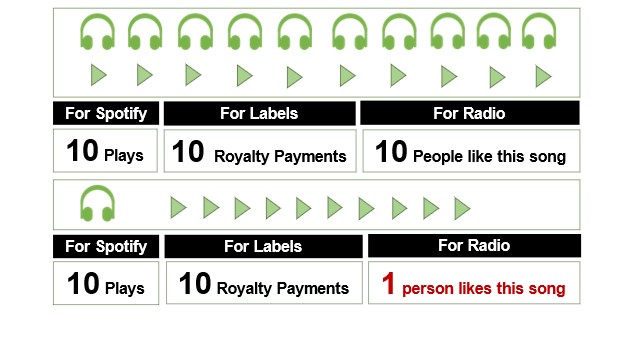
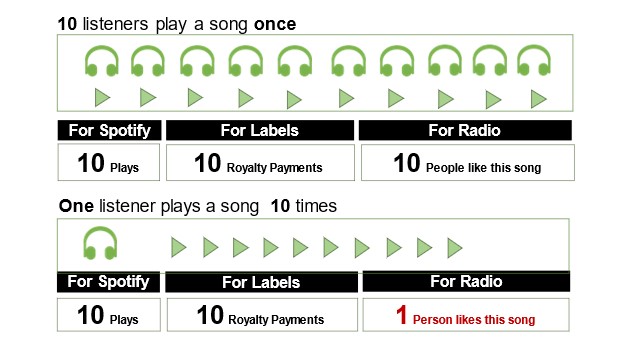
2) Streaming data shows how many times a person plays a song, not how many different people played it—which amplifies active consumption.

When Dave bought a Rush album, it counted once in album sales data. When Stella plays a new song by Mitski 10 times the week after it’s released, it counts 10 times in streaming data.

Measuring plays instead of people can lead you to assuming that a song is more popular than it is because it amplifies the active listening consumption from its fans playing that song repeatedly.

Not only does the overall music consumption pattern of the top 10 most-played songs on Spotify resemble song sales—not radio airplay or callout research—but it is even more heavily weighted towards new releases than iTunes or 45s sales were.
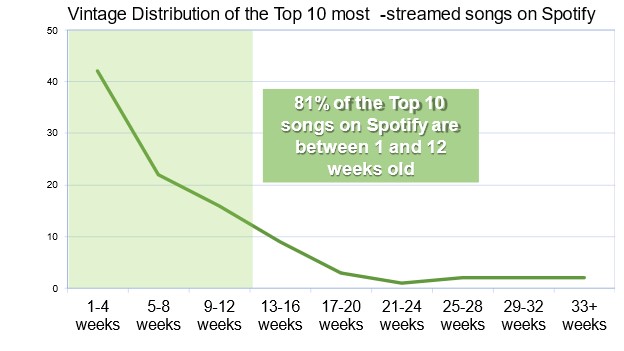
Because streaming data shows a song’s plays, not how many people play it, streaming data resembles the active consumption pattern of sales data

“But wait,” you ask, “if listeners are playing a song so often that it’s the #1 song on streaming, doesn’t that mean it’s super popular and radio should be playing it, too?”

In radio, we need songs that as many listeners as possible know and love. At the very least, radio needs to play songs that a large percentage of listeners don’t downright hate.

But streaming data shows plays, not people. A very small number of listeners who are very excited about a favorite artist’s new release can make it the #1 most streamed song because of their binge listening, at least for a week or two.

In short, radio needs information about passive music consumption to find songs with widespread appeal, not the amplified active consumption of an artist’s superfans.

Here’s how you can spot the difference:

HOW TO SPOT ACTIVE VS. PASSIVE CONSUMPTION IN STREAMING DATA

Let’s review the Spotify streaming data from two chart-topping artists.

Active consumption tops streaming charts:

When a popular artist releases new material, that artist’s fans flock to streaming and sample those new songs repeatedly. This active music consumption means the most streamed songs on Spotify are often brand new releases.

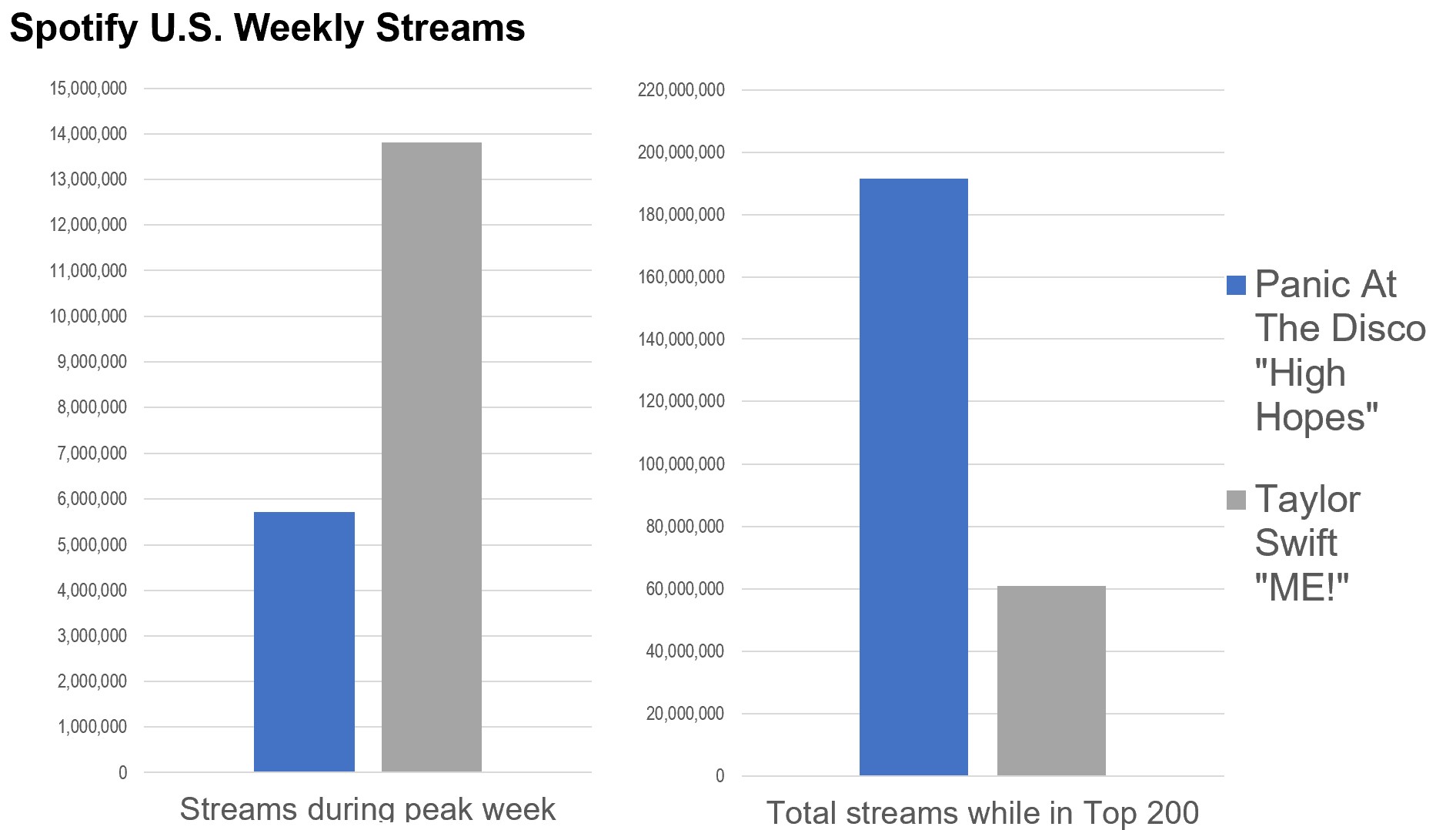
Not every song that debuts big stays big, however. Consider Taylor Swift’s “ME!”. The week she released “ME!”, it garnered over 13-million plays on Spotify in the U.S. making it the #1 song on Spotify that week.
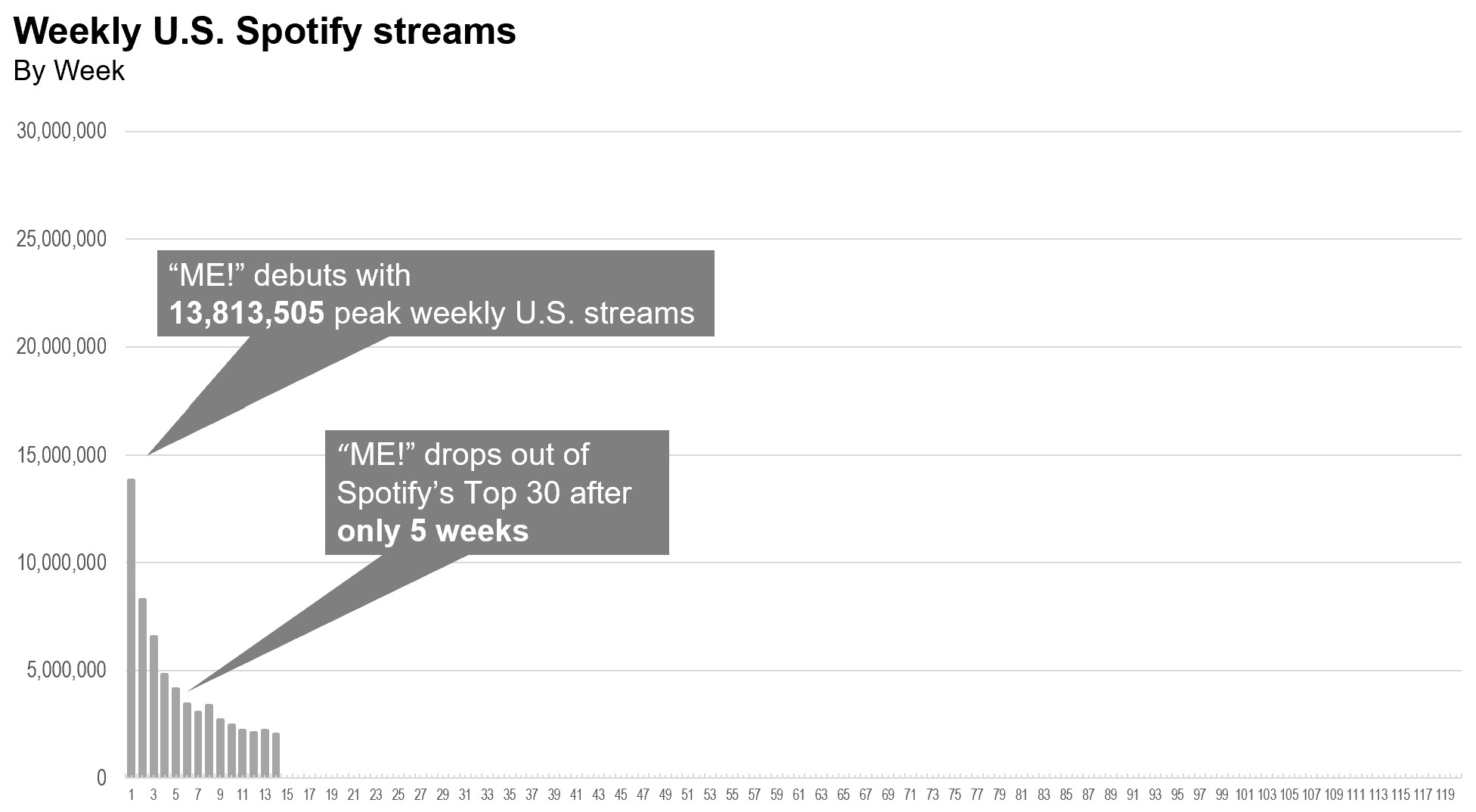
Taylor Swift’s “ME!”’s strong debut showcases active music consumption

After just five weeks, however, “ME!” fell out of Spotify’s Top 30. The broader audience beyond Taylor’s hard-core fans never embraced the song (as our Integr8 New Music Research clients can attest,) meaning it never received massive passive consumption.

For “ME!”, its Spotify consumption resembled a record store: Avid Taylor fans bought the new album, but it didn’t catch on with a wider audience.
Passive consumption isn’t the most streamed song this week but rather is the song listeners keep streaming week after week.

Songs that keep streaming steadily—albeit often down the ranker—are often songs receiving primarily passive consumption. Ultimately, passive consumption leads to a song receiving far more total lifetime plays than songs that saw early active consumption.

Consider Panic At The Disco’s “High Hopes”. It received only a quarter of the plays on Spotify in the U.S. the week it debuted compared to Swift’s “ME!”. Later, when the song was the #1 most-played song on U.S. radio, streaming plays for “High Hopes” steadily rose, presumably as listeners discovered the song on the radio and went to Spotify to hear it again.
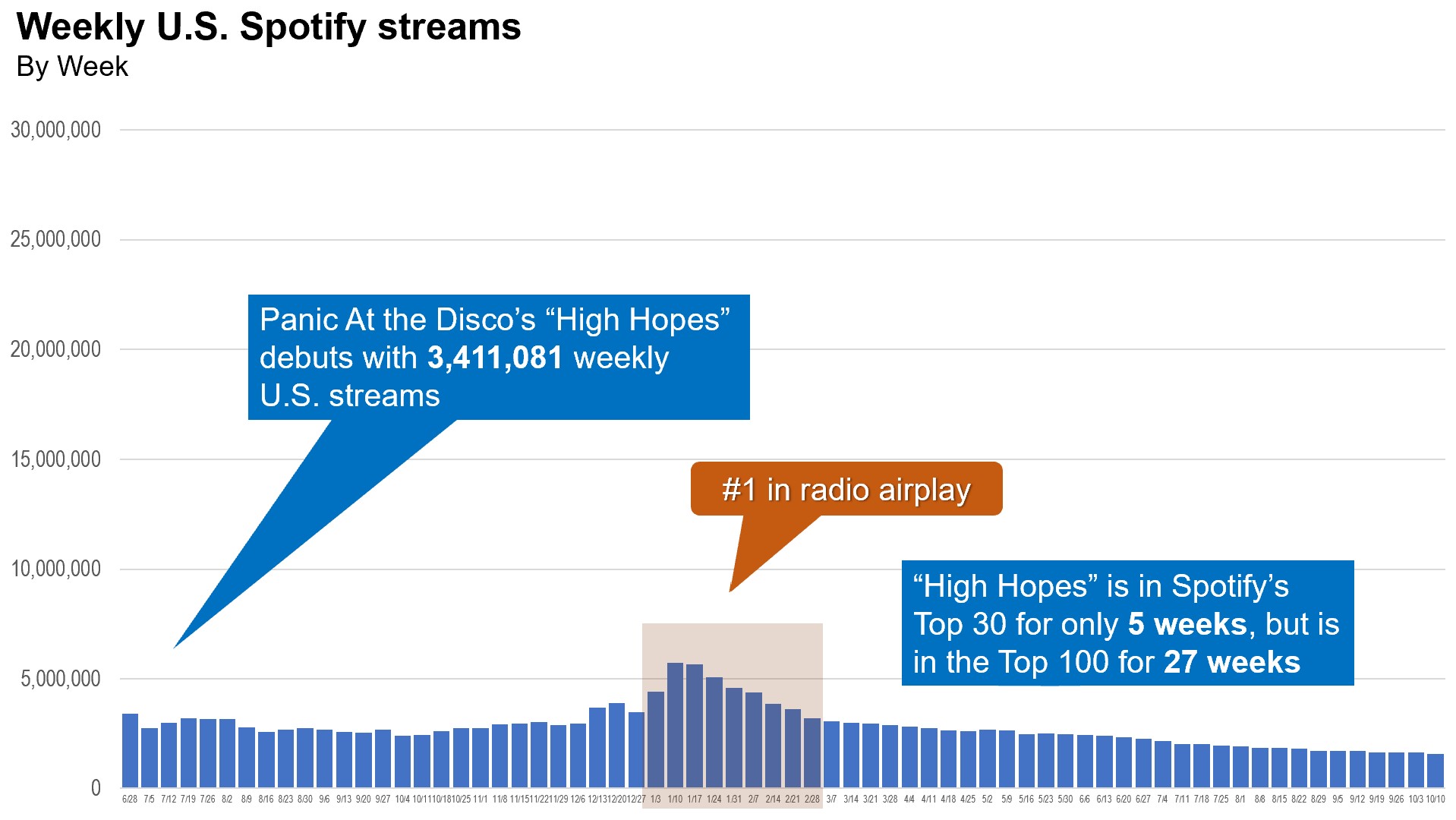
Panic At The Disco’s “High Hopes” never even reached Spotify’s Top 10, but listeners continued steadily streaming it for months.

Both Spotify streaming and FM airplay simultaneously fell off for “High Hopes,” but the weekly streaming plays for “High Hopes” didn’t decline nearly as rapidly as it did for “ME!”

This pattern of growing, peaking, and falling over a long period of time is a passive consumption streaming pattern that resembles how listeners consume music on the radio.
Although “High Hopes” barely cracked Spotify’s Top 30 at its peak, steady streaming week after week for the song ultimately garnered it three times as many streams during its time on Spotify’s Top 200 chart than Taylor’s #1 debut garnered her.
“ME!” and “High Hopes” represent extreme examples of active verses passive consumption. Many massive radio hits that garner long-range passive consumption on streaming services also debut with massive active consumption by the artist’s fans.

HOW TO READ A STREAMING CHART

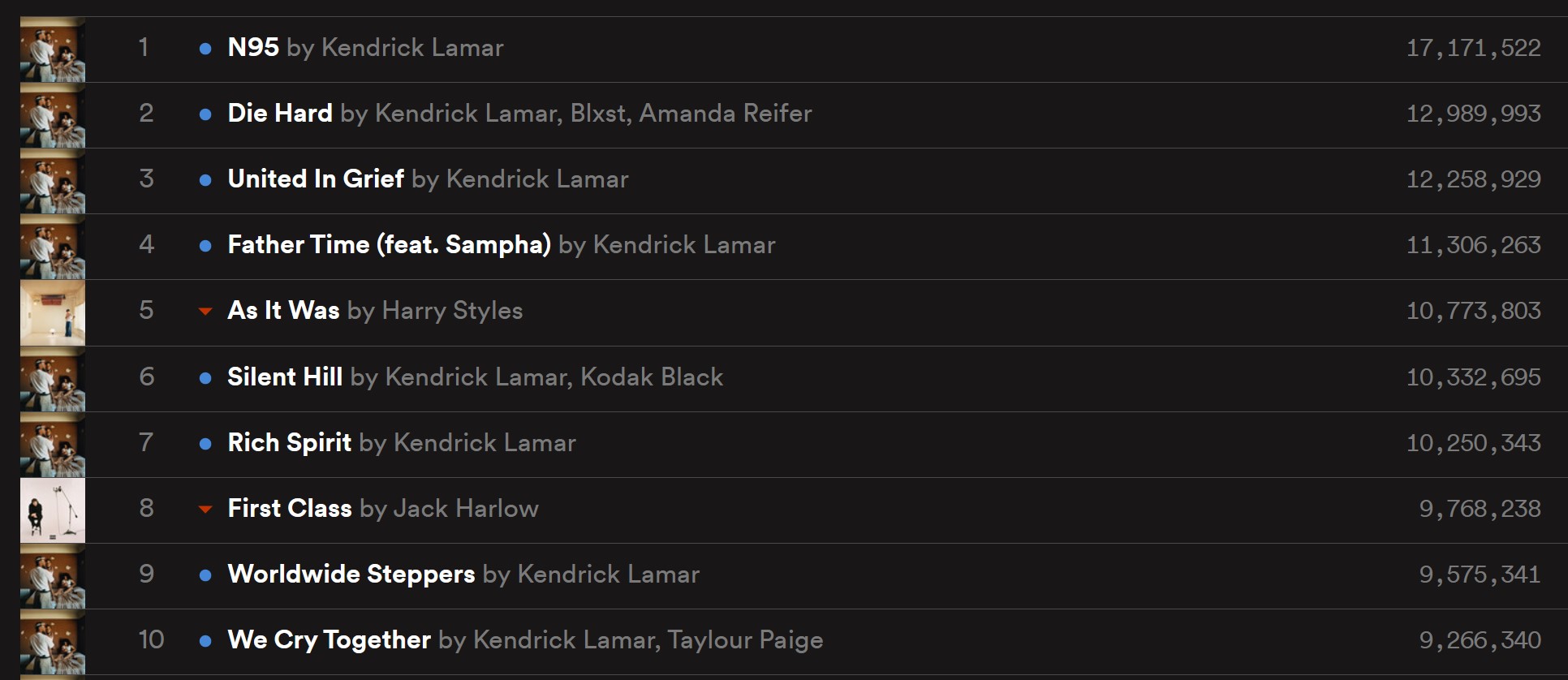
Look at Spotify’s charts of the Top 200 most-streamed songs in the U.S. for the week ending May 19th, 2022.

Kendrick Lamar just dropped a new project, which occupies all of the Top 10, save for massive and relatively new songs by Harry Styles and Jack Harlow. (The blue dot beside a title indicates a brand-new release):
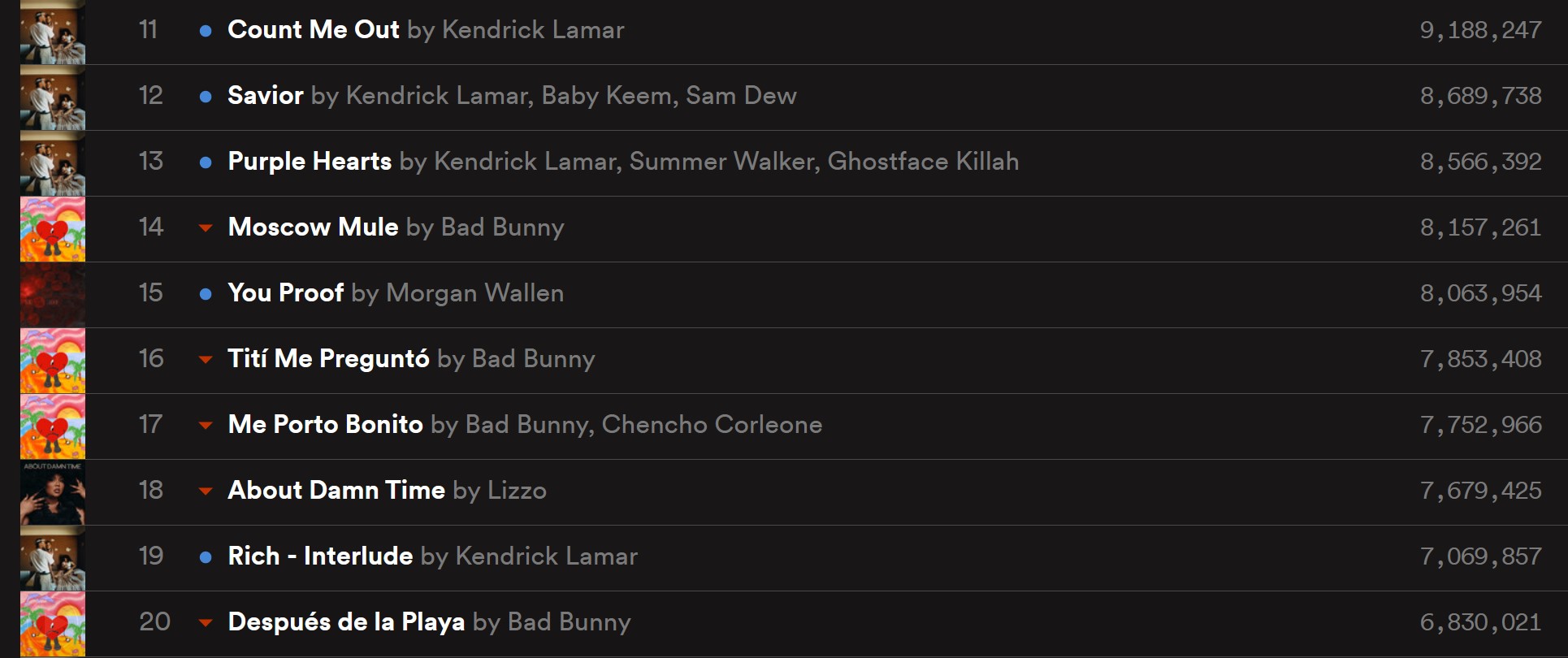
But the new release dominance doesn’t stop with Spotify’s Top 10; #11 through #20 also belong to Kendrick Lamar debuts, a Morgan Wallen debut, and songs Bad Bunny and Lizzo debuted the previous week.
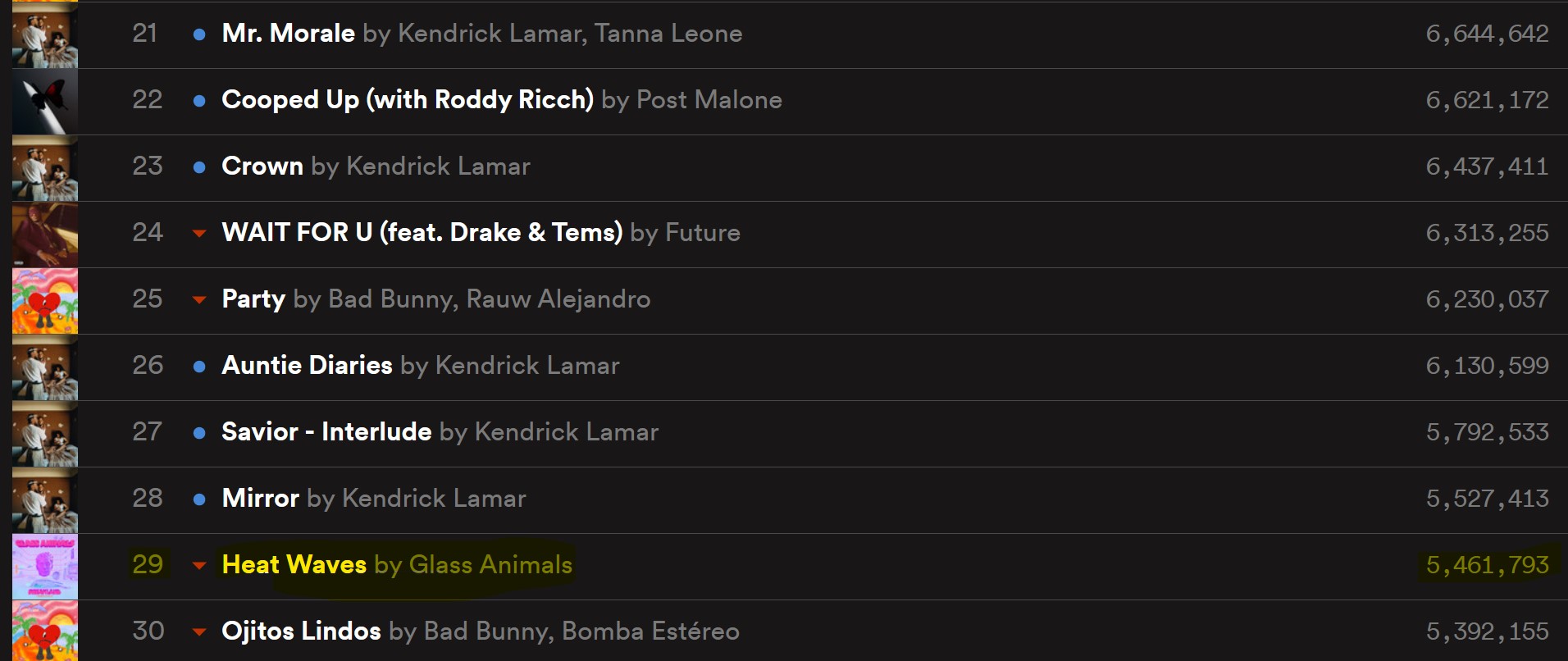
During this week with a lot of new music releases, we must scroll all the way down to #29 to find an example of sustained passive consumption with Glass Animal’s “Heat Waves”.
All the way near the bottom of Spotify’s Top 50, we find a bevy of songs most radio stations would consider recurrents.
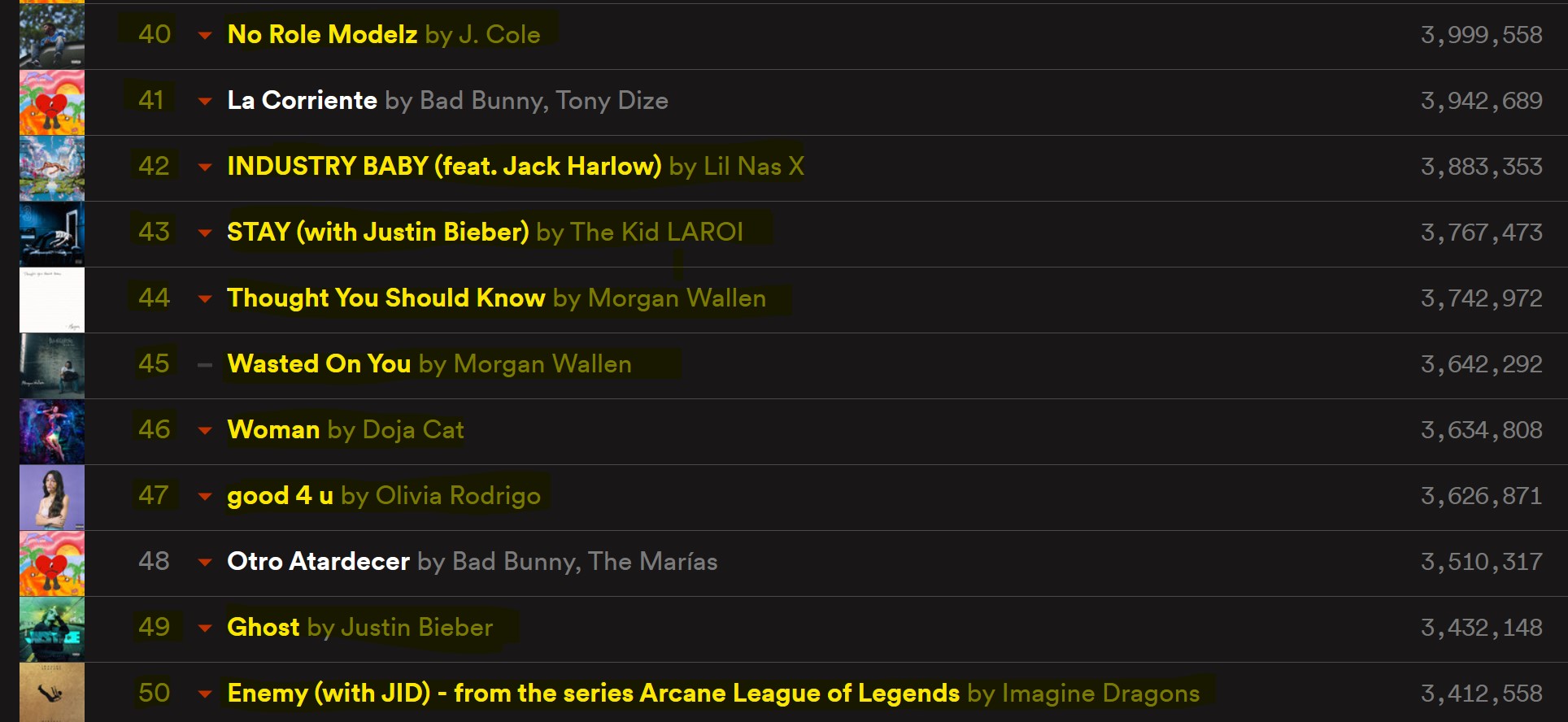
These songs garnered over 3 million plays on Spotify in the U.S. last week. While that figure pales to Kendrick Lamar’s 17 million+ streams for his debut of “N95,” it represents a steady number of plays that have been strong for months.

Finally, recognize the amplifying effect that measuring plays instead of fans has on songs’ rank positions.

Go back four weeks to Spotify’s top songs in the U.S. for the week ending April 28th, 2022: This week is before the big debuts of Hip Hop, Country, and Reggaeton superstars that dominate at the end of May.
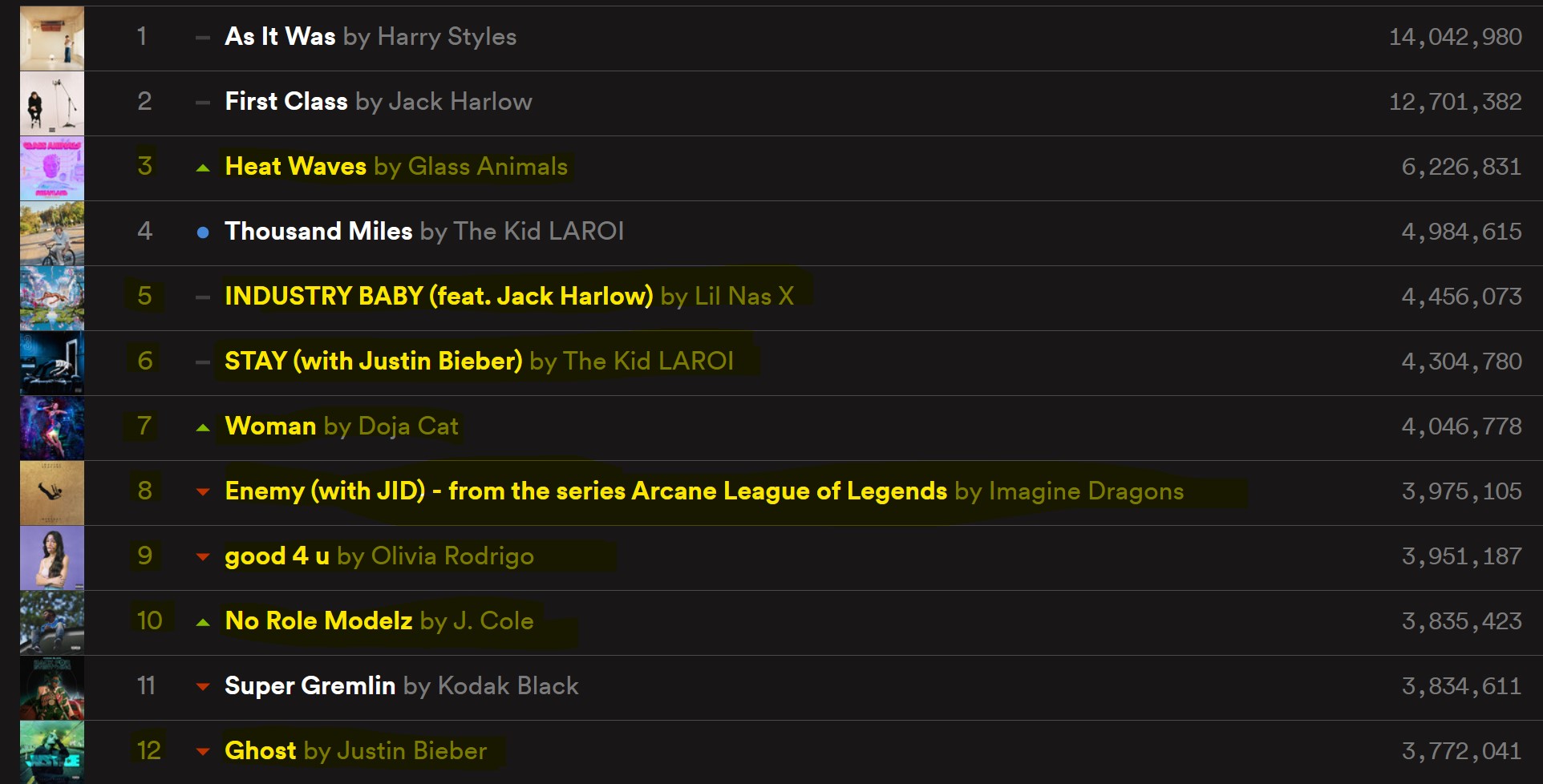
 

Several songs that were pushed down to ranking #40 to #50 were among the top 12 four weeks ago. However, the actual number of plays these songs were garnering four weeks ago only dropped slightly.

For example, Oliva Rodrigo’s “good 4 u” fell from #9 in April to #47 in May! However, the number of plays “good 4 u” had only declined from 3.9 million to 3.6 million streams. Despite dropping 38 positions, Rodrigo’s raging rocker was still garnering 92 percent of the streams in May that it got in April.

THREE RECOMMENDATIONS FOR INTERPRETING STREAMING DATA 
1)    Treat streaming usage like record sales on steroids in a song’s first weeks (active consumption). The artist’s fans are checking out a new release—usage that’s amplified by the fact that streaming data measures a song’s plays, not the number of people who played it. Just as top-selling albums didn’t always generate Top 40 hits, don’t assume that strong active consumption always leads to mass appeal.
2)    To spot songs with widespread appeal, look for songs that listeners keep streaming week after week (passive consumption). Those songs won’t be the #1 song on Spotify. They may not even be in the Top 40. The top of streaming charts often belongs to artists’ fans binge-listening to new releases. When listeners keep streaming a song week after week at a steady pace, it’s indicative of the kind of passive music consumption that happens when a lot of people like the song.
3)    Don’t assume what’s huge this week will ultimately become a hit. Active consumption by an artist’s fans doesn’t always translate into mass appeal passive consumption by your station’s listeners.

MUSIC CONSUMPTION IS TIMELESS

When the way we play music is rapidly shifting to devices and media we couldn’t fathom two decades ago, it can be difficult to see the ways our relationship to music have remained unchanged.

Stella might pull a phone out of her pocket instead of driving to Sam Goody, but her connection to Mitski and her music is no different from the excitement and personal validation Dave got from Rush when he was her age.

Liam might play a friend’s Spotify playlist on his Bluetooth speaker when he does his homework instead of playing the Top 40 station on her boombox as his mom Michelle did, but the role of accompanying one’s activities with a soundtrack is the same.

Finally, be wary of those experts eager to dance on the grave of new music. Most contemporary radio genres have been in a rut recently. As anyone who endured Air Supply and Michael Bolton ruling CHR can attest, we’ve seen slumps before.

We’ve also seen new generations of young fans take musical subcultures mainstream immediately after each slump, from Alt Rock and Hip Hop, to EDM, to Rock ‘n’ Roll itself.

The disruption of how to evaluate music consumption metrics can amplify the feeling that the rejection of new music is different this time. It isn’t. Bubbling in the lower ranks of those streaming rankers are the songs that point towards what’s next for new music.

Get to know someone like Stella to see it.

Why Your Spin Counts Don’t Count Anymore (And Why They Never Really Did)

When you started your programming career—if you were lucky—you had a mentor who bestowed upon you a way to figure out when your listeners should know a new song and when they were likely getting sick of it. The time-honored benchmarks that you received were your own station’s spin counts.

“Don’t test a song in callout until it’s had 100 spins.”

“A song will be highly familiar after 300 spins.”

“After 1,000 spins, it’s a recurrent.”

Your mentor may have deduced these metrics based on years of observing their stations’ call-out research and tracking their own airplay. More likely, your mentor simply told you what their mentor told them.
Either way, these metrics were never based on verified statistical correlation. A more fundamental flaw, however, is that your airplay never was what made listeners familiar with new songs and ultimately made them tired of them after they were hits.

What really matters is how often your listener hears a song.

Even today, when we theoretically could invent some Shazam-driven service to eavesdrop on every song someone hears, no such tool to directly measure listeners’ music exposure actually exists. Back in the beeper era, it would have been downright impossible.

Fortunately, in that era when FM radio, CDs, and music videos represented the entirety of new music discovery, using your spin counts as a corollary to listeners’ song exposure was a reasonably reliable alternative.

Today, those benchmarks are about as relevant as knowing how to program a VCR.

Here are five reasons why trying to gauge your audience’s awareness of new music based solely on your spin counts is now a futile endeavor.

1. Radio’s TSL is lower

Let’s swallow the toughest pill first: Listeners are spending less than half the time with FM/AM radio today than they did back when programmers first used those oft-quoted spin count benchmarks. That math suggests it now takes 600 spins for a listener to hear a song on your station the same number of times as 300 spins would in years past. Unfortunately, that adjustment only addresses changes to the radio’s weekly TSL.

2. People hear music in many more places

Your listeners consume music everywhere. They consume it on TikTok, Spotify, the other Spotify-like streaming services, YouTube, SiriusXM, TV shows, and TV commercials. They Shazam songs they hear at the new hipster Target. Alongside your station and the other stations your listener tunes in to, all these sources contribute to their new music exposure.  With so many different places listeners encounter contemporary music, it’s no longer enough to know how often other stations in your market have played a song.

Some songs become widely well known before they’re ever played on the radio. For other songs in certain radio formats, your station may still be the only place a listener ever encounters a song. The only way you’ll know how well your listeners know a song is to ask them directly in new music research.

3. Spins in evenings don’t count anymore
“We’ve spun it over 500 times in the last few months. Why isn’t it more familiar?” When an Integr8 New Music Research client asks this question, we often discover most of those spins were during overnights and evenings.

You’ve long known overnights reach a smaller and fundamentally different group of listeners than other dayparts. However, many successful programmers still cling to the idea that younger and more musically engaged listeners to listen during the evenings.

Check your own Nielsen Audio daypart metrics for AQH persons, Weekly Cume persons, and age composition. You’ll discover that the tradition of younger listeners dominating evenings is largely a thing of the past.

This change hits me personally. I have fond memories of evenings doing homework while listening to stations’ most adventurous personalities play the format’s newest music. There were features like “Smash or Trash,” “Battle of the Bands,” and other ways stations showcased new music to their youngest listeners. There were call-ins and contests. Evenings was the time when youth culture ruled the radio.

However, as terrestrial radio usage has declined at home and becomes increasingly limited to in-car listening, younger listeners have left evening radio because they’re simply not in the car at night. The disappearance of live evening shows didn’t help.

4. Spins heard too far apart don’t count

Think of a song you love so much you could never forget it. Think of a song you hate so much you wish you could forget it. Your brain grew brand new cells to permanently store those songs.

Before the brain invests that energy to create long-term memories, it needs frequent and emotionally compelling engagement with a song, which it tracks in your short-term memory. Short-term memory is all too eager to get rid of memories you don’t need. Repeated exposure tells the brain a something is worth remembering permanently. Every night of sleep tells the brain it can purge a temporary memory.

That’s why 300 spins is an incomplete metric: 100 spins for three weeks will have a very different impact on your P1 listener than will 30 spins over 10 weeks.

Your sales department has long understood this concept. Find the account executive who works with successful long-term local direct clients. She tells her clients that buying too few spots in each week is a waste of money. Her rule of thumb has long been that a listener needs to hear a commercial at least three times a week to remember it, otherwise the brain simply doesn’t register ever hearing it.

Ask your favorite salesperson to use Tapscan to calculate the reach and frequency of your most common rotations. You may be shocked how seldom the typical weekly Cume listener actually hears your music.

5. Spins without context have less impact

We used to make a big deal about playing big new releases. Then, minute-by-minute PPM data showed listeners were more likely to tune out during a brand-new song than during a familiar favorite. Radio reacted by eliminating anything that would point out new music: We trashed the evening Smash or Trash features. We buried new songs after stopsets. We pretended we didn’t play new releases.

A side effect of no longer spotlighting new songs when we play them is that listeners are less likely to notice those new songs. When personalities hype a new song, it engages the listener to actively pay attention to it. That listener might not love the song until they’ve heard it many more times, but they are aware of hearing it.

So how can you gauge how long it should take for listeners to become familiar with a new song if you can’t use spin counts? How can you know when it’s time to move a song to recurrent if you can’t count on spin counts?
Trust your callout

New music research doesn’t simply tell you which songs listeners think are awesome, awful, or meh. It also tells you the percentage of listeners who are familiar with each song—regardless of where they’ve heard the song. Use that familiarity figure.

Callout research also can help you gauge when listeners have had enough exposure to a big hit song through the burn score. Integr8 New Music Research includes a proprietary measure called Hitcycle®, which gives you your listeners’ perspective on when songs are growing, peaking, or losing their relevance as current hits.

Time is a better yardstick than spins

What if you don’t have access to local callout research? Through analyzing years of streaming, sales, and airplay data, we’ve discovered that measuring weeks of consistent exposure is a better metric than a raw count of your own station’s spins. First, note when your listeners would have first encountered a song, the most reliable method for which is simply to note when the song first appeared on your format’s most relevant Billboard chart. Next, count the weeks. In the CHR universe, it typically takes eight (8) weeks after debuting on the Hot 100 to become a Top 10 hit that’s familiar among most listeners. For Country, it takes 13 weeks after debuting on the Hot Country Songs chart.

On the back end of a song’s lifespan as a current hit, songs in the CHR universe typically remain relevant currents for 26 weeks. In Country, it’s around 36 weeks.

While these benchmarks vary by song, using weeks counts will give you the best guess on when a song should be highly familiar and when listeners are ready for a song to move to recurrent.

In cases when a song’s familiarity doesn’t match your expectations, ask yourself these questions:

  • Are listeners hearing this song from other sources? Listeners may already know a song that’s been huge elsewhere by the time you start playing it. If your station is the only place listeners are likely to hear that song, however, it will take longer for that song to become well-known among your audience.
  • Are you playing the song frequently during the day? No matter how many times you’ve played a song, if the typical listener doesn’t hear a new song frequently, they’re not going to remember hearing it. Furthermore, yesterday’s tradition of testing out new releases during evenings simply doesn’t jive with how listeners use radio today. Bet big on your biggest new releases by playing them often during daytime dayparts. If you’re not confident enough to play it in afternoons, don’t add it at all.
  • Is your airstaff helping listeners get to know the song? When a radio personality gives a reason to pay attention to a new song, it acerates listeners’ awareness of that song, which in turn helps listeners figure out if they love it or hate it faster. It also encourages listeners to stick around and give an unfamiliar song a chance instead of tuning out.

These changes in music consumption are inevitably depressing for those of us devoted to radio. However, don’t confuse “your spin counts don’t matter anymore” with “your music programming doesn’t matter anymore.” Radio remains the medium that validates that a song is genuinely a mass-appeal hit.  Today’s artists routinely say they only realized their song was a big deal when they heard it on the radio.

More importantly, the songs you play validate your listeners’ tastes. To fulfill that role effectively, it’s time to replace spin counts with a more holistic view of your listeners’ music consumption.


How The Weeknd Defeated a 61-Year Chart Record (And Why it Matters For How You Use Streaming Data)

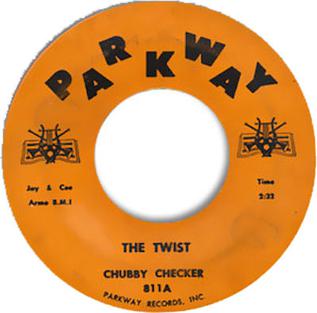
Chubby Checker’s “The Twist” was always the #1 song of all time, according to Billboard. It first hit #1 on the Hot 100 in September 1960, thanks to a teen-led Twist craze, then reached #1 again in early 1962 when twisting belatedly caught on with celebrities and well-heeled fashionable adults who typically never touched teenybopper dance records. “The Twist” was not just a hit song; it was a cultural sensation, spawning dozens of Twist-themed spinoffs from the Isley Brothers and later the Beatles’ “Twist And Shout” to 1988’s Twist remake by The Fat Boys.

Around Thanksgiving of 2021, however, Billboard quietly announced that Checker had ceded the Hot 100 G.O.A.T. to the Canadian R&B singer The Weeknd’s “Blinding Lights.”

Released late in 2019, “Blinding Lights” was Spotify’s most-streamed song of 2020 and is now the 2nd most streamed song of all time on the platform behind only Ed Sheeran’s “Shape Of You”. On U.S. radio, “Blinding Lights” was the 2nd most-played song in 2020 and was still the 4th most played song in 2021.

“Blinding Lights” is undoubtedly a catchy tune with widespread and enduring appeal, but how did it surpass a multigenerational cultural phenomenon to become the Greatest Of All Time?

In this post

·       How callout research slowed the hit music cycle

·       Streaming shows vast differences in staying power

·       How to use streaming data to find the real hits

·       What makes Blinding Lights enduring?


No shade intended, but The Weeknd’s accomplishment tells us more about music streaming’s impact on music consumption than it does the cultural relevance of “Blinding Lights.”

To understand how streaming data is changing our understanding of what constitutes a hit—and why it matters for how you use streaming data to pick the right new music—we first need to take a trip back to the Disco era.

How callout research slowed the hit music cycle

In its first two decades, Top 40 radio used local sales figures for 45 singles to determine airplay. Whenever people stopped buying a record, radio stopped playing it. Throughout the 1960s, the typical top 10 hit only remained in current rotation for about 12 weeks because that’s how long most 45s remained best-sellers.

(50 years later, at the height of the digital download era, the typical big hit on iTunes stayed among the Top 10 bestsellers for 12 weeks. The more things change…)

But in the early 1970s, people were buying albums, not 45s. That was a problem for hit- oriented Top 40: They knew which albums were selling, but how could they tell which track on the album was the real hit?

The answer was callout research.

By the mid-70s, callout was the hottest new tool in radio research. In addition to identifying hit album tracks, this new “passive research” helped radio understand the tastes of the 80% of their listeners who rarely or never bought music in comparison to the 20% of “active” music listeners who did.

Unexpectedly, callout also taught radio two vital lessons:

1) People still love hearing songs on the radio long after new listeners have stopped buying those songs on vinyl;

2) Some songs have far more staying power than others.

“Sales, of course, are a great initial indication of when to start playing a record, but no way to tell when to stop playing it,” programming consultant Jeff Salgo explained in the November 20th, 1977 issue of Billboard. “You may need to keep playing it long after sales have stopped or tapered off.” Salgo noted that while listeners were sick of “Undercover Angel” after 20 weeks, Chicago’s “If You Need Me Now” was still his #1 best-testing track after 13 months.

This difference in song sales and song appeal makes sense: Unless you broke it, you only needed to buy a record once, no matter how often you played it. However, we had no way to track how often people played those 45s after they bought them, or how long they kept playing them before forgetting them.

With the new knowledge of how long listeners continued to crave current hits, callout research slowed the cycle of when CHR moved big hits out of current rotation. Since the Billboard Hot 100 chart tracked sales and airplay, slower airplay had the impact of keeping big hits on the charts longer. In the 1960s, it was rare for a big hit to stay in the Top 10 for more than 16 weeks, By the 1980s, songs routinely stayed in the Top 10 for over 20 weeks.

Streaming shows vast differences in staying power

Fast forward to the late 2010s. Streaming data finally gave us data on music consumption behavior that aligns with the attitudes listeners express about new music in callout:

1) People still play songs on Spotify long after new listeners would have stopped buying those songs on iTunes;

2) Some songs have far more staying power than others.

“Blinding Lights” is a perfect example of a song that has extraordinary staying power, as revealed by its streaming history.

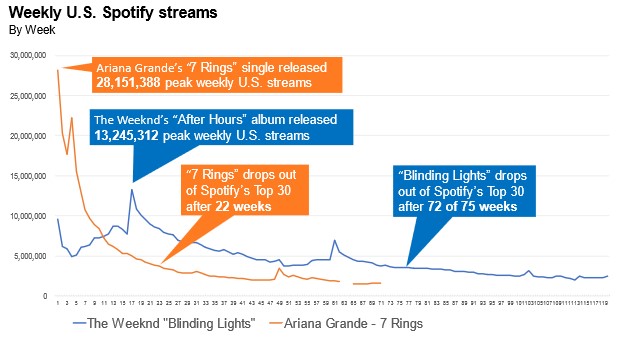
Let’s examine the weekly U.S. plays on Spotify for “Blinding Lights” alongside another bona-fide hit, Ariana Grande’s “7 Rings”. During its biggest week, “7 Rings” had almost twice as many plays as “Blinding Lights” had during its peak week. But while Grande’s hit remained among Spotify’s Top 30 most-played songs for a respectable 22 weeks, The Weeknd’s ode to excessive illumination stayed in Spotify’s Top 30 for an unprecedented 72 weeks.

Streaming data does not just allow us to see differences in how long listeners remain interested in hearing songs at the end of their time as current hits. Streaming also shows us differences in which songs will become big hits.

This week’s biggest streaming hit isn’t always the real hit

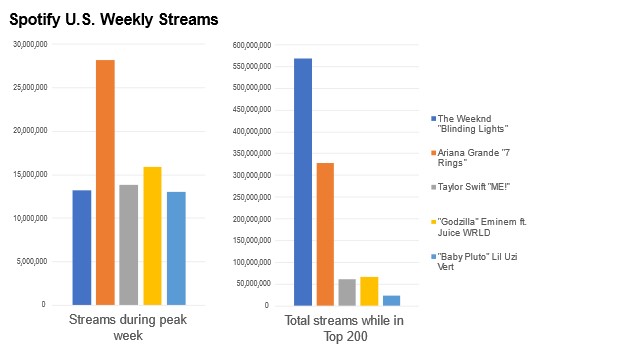
Consider “Blinding Lights” and “7 Rings” alongside three songs from Taylor Swift, Eminem, and Lil Uzi Vert that did not become mass-appeal hits.

All three songs debuted as the #1 most-streamed song on Spotify.

All three were played more often on Spotify during the week they debuted than “Blinding Lights” got played during its peak week.

However, “ME!”, “Godzilla” and “Baby Pluto” quickly fell out of Spotify’s Top 200 and ultimately garnered dramatically fewer total plays during their hit runs than did “Blinding Lights” and “7 Rings”.

What happened?

Taylor Swift, Eminem, and Lil Uzi Vert are proven hitmakers with passionate fan bases that binge-stream anything these artists release as soon as it drops.

They’d have camped out at the Sam Goody for the midnight album release in 1992.

After fan bingeing ended, however, those fans didn’t keep playing these tracks as often as they kept streaming their biggest hits. Meanwhile, casual music listeners beyond each artist’s core fans never gained interest in these tracks, either.

Since the onset of streaming, we’ve consistently seen the pattern that the big hits on streaming that also become successful hits on the radio aren’t necessarily the songs with the most streams this week, but are instead the songs that listeners keep streaming week after week

Binge-listening always existed, but before streaming, we had no data to track it. We knew how many people bought an album, but not how often they played it, or which tracks they played most.

In contrast, streaming data tells us how many times a track plays, but not how many different listeners played the track.

Certain weeks, those top slots on Spotify’s charts belong to the tracks of a new release as fans binge-listen to new albums. Meanwhile, established songs with broad appeal beyond artists’ core fans might not get played as often today, but that broad audience keeps playing those established hits reliably day in and day out.

Although Billboard began including streaming data in the Hot 100 songs chart alongside sales and airplay in 2007, it wasn’t until the late 2010s that music streaming overtook digital downloads as the primary way people pay to hear their music. That change has impacted which songs are officially the biggest hits in the USA in several jarring ways—including the unprecedentedly long chart run for “Blinding Lights”.

With the new knowledge of how often people keep playing songs reflected in the official Billboard charts, The Weeknd stayed on the Hot 100 for an unprecedented 90 weeks.

“The Twist,” despite multigenerational appeal, far-reaching cultural impact, and the rarity of being a hit twice, only stayed on the Billboard Hot 100 for a combined 39 weeks.

This change means you can expect the biggest hits to stay on the charts longer. However, this change is not because listeners’ interest in songs has gotten inherently longer, but instead because we finally have behavioral data to track it thanks to streaming.

You can also expect more short-lived chart-toppers when fans binge new music from their favorite artists. This change isn’t because people never listened to a new album over and over before (although Spotify does make accessing new releases instantaneous), but rather is because we finally have behavioral data to track it thanks to streaming.

Just as examining Weekly Cume in diary isn’t the same as examining listening occasions in PPM, you cannot evaluate today’s streaming-driven data the way you examined yesterday’s sales-driven data.

The fact that how we consume new music—and the metrics we use to measure music consumption—are undergoing a fundamental metamorphosis is why I’m dubious of studies that claim people aren’t as interested in new music as they were in years past.

What makes Blinding Lights enduring?

So why did this specific song by The Weeknd stick around so long? Is “Blinding Lights” inherently more infectious than “Circles”, “Levitating,” or “Good 4 U?”

Perhaps it’s merely coincidence, but “Blinding Lights” reached its peak Spotify streams during the week of March 26th, 2020. It was the week The Weeknd released his After Hours album. It was also the beginning of our nation staying at home and time seemingly standing still.

Perhaps “Blinding Lights” greatest asset—and the reason listeners kept playing it—has been its comfort as one of the last big new songs from before the “new normal.”

Three Lessons Radio Can Learn From 2021’s Music Trends

A teenager turns a bitter breakup into an entire album. An Italian Eurovision winner has a U.S. hit with an old-school rock banger. A Canadian R&B singer breaks the GOAT chart record of a 61-year-old song by a Philadelphia R&B singer. An Applebee’s commercial is a hit.

These oddities mark our memories of 2021’s music. While the styles of music U.S. consumers enjoy most saw little change in 2021, beneath the surface of last year’s most popular songs are emerging trends that have a significant impact on how you choose current titles for your station in 2022.

In this blog…

Tracking the Hits

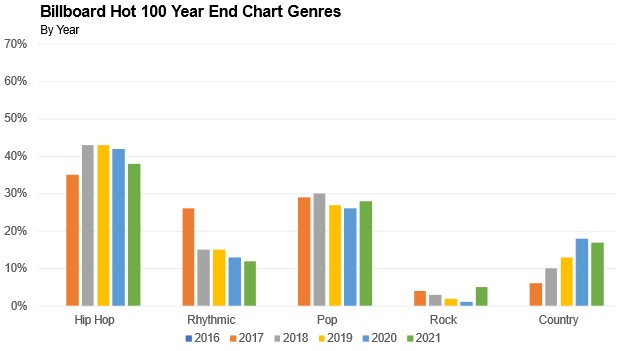
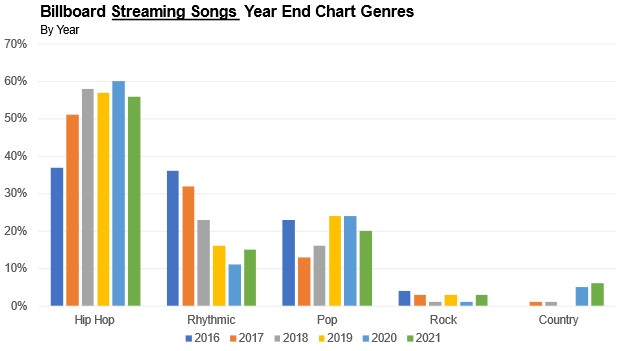
Every year, Integr8 Research tracks Billboard’s year-end charts of the biggest songs on radio, streaming, and paid digital downloads for the year. On the surface, 2021 doesn’t look very different from 2020: Hip Hop remained the most popular sound on the combined Hot 100 year-end chart but lost some ground to Pop.

Look closer at last year’s biggest hits, however, and you’ll find four trends in music consumption and the lessons they hold for your programming decisions, as we will detail next.

New music returns to the radio

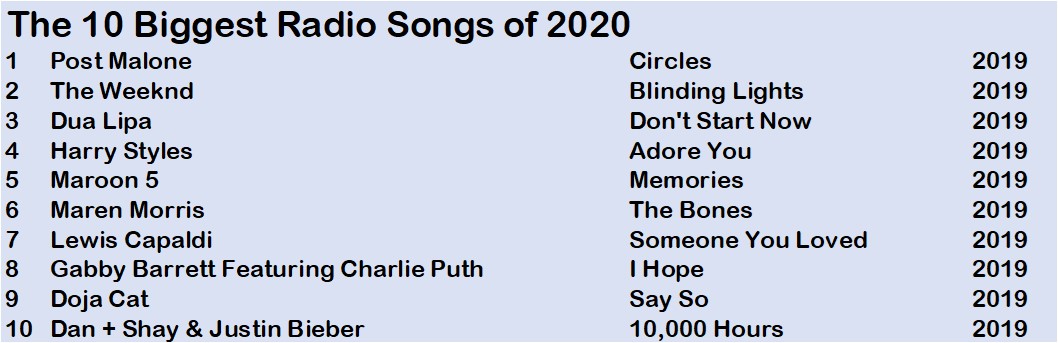
There’s tremendous conjuncture about the health of new music—and no one metric can adequately address an issue as complex as the public’s appetite for the novel verses the familiar. The songs listeners heard most on the radio in 2020 certainly re-enforced the idea of falling demand for the newest music—none of the Top 10 most-played songs on U.S. radio in 2020 were actually released in 2020. All were 2019 releases.

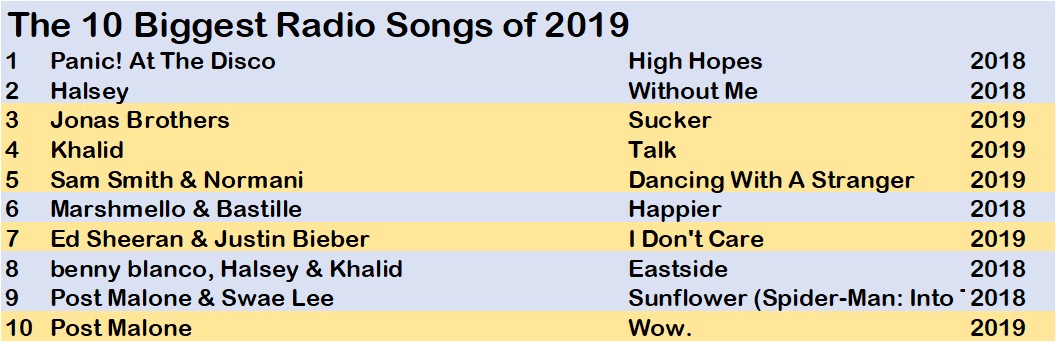
Typically, about half of the top 10 most-played songs on U.S. radio are songs released during the current year, while the other half are from the previous year. 2019’s 10 most played songs on U.S. radio demonstrates this norm.

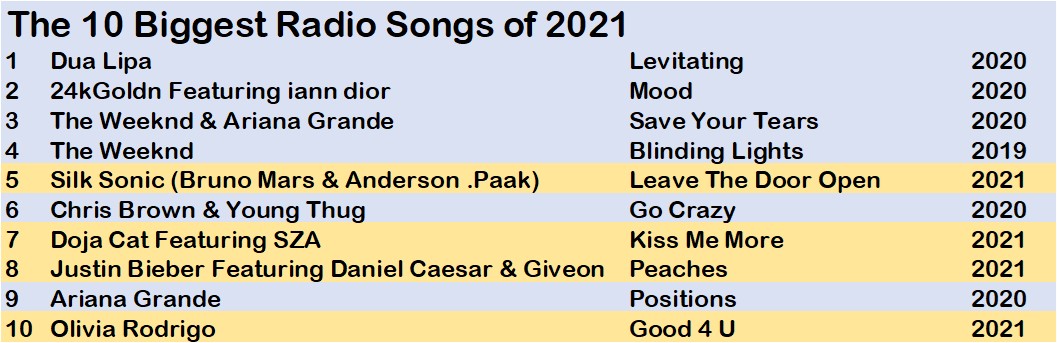
While 2021 looked way too much like 2020, at least the vintage of music on U.S. radio returned to normal. 4 out of the 10 most-played songs last year were in fact released in 2021.

One anomaly among 2021’s 10 biggest radio hits is The Weeknd’s “Blinding Lights”. Notice that this 2019 title remained among radio’s top songs in 2021, despite being almost two years old? We’ll talk about that title’s significance in future blogs.

The lesson for radio: new music is not dead.

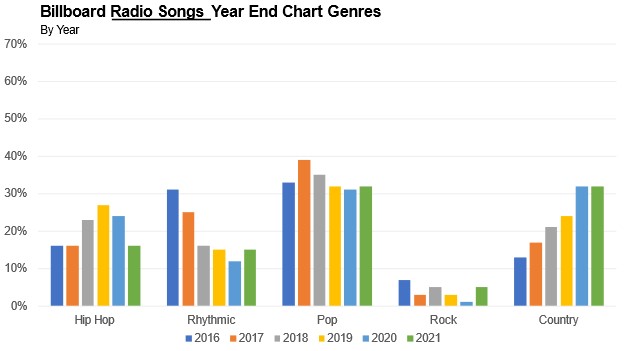
As illustrated on the following chart, style-wise, Pop and Country remained the biggest sounds listeners hear on U.S. radio. Meanwhile, Hip Hop saw less radio exposure in 2021 compared to 2020.

Streaming becomes mainstream

2021 marked a watershed moment for the songs most played on streaming services. For the first year ever, most of the 10 most-streamed songs were Pop or Rhythmic Pop songs, not Hip Hop.

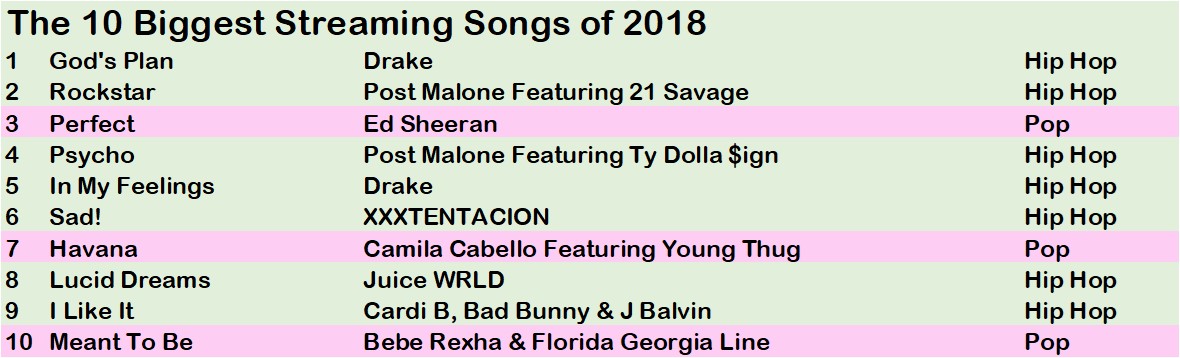
Historically, the biggest songs on streaming have been the “pure” Hip Hop titles that are typically limited to Urban/Rhythmic radio airplay, while only a handful of the most-streamed titles are Pop, as highlighted in 2018’s Top 10 most streamed songs:

While Hip Hop titles remained prominent among the year’s 75 biggest songs on streaming, 2021 marked the first year the 10 biggest streaming hits were Pop and Pop-oriented Hip Hop sounds typical of CHR airplay—seven of the Top 10 most-streamed songs in 2021 were Pop titles.

Additionally, the three Hip Hop titles among the 10 most streamed songs of 2021 were mainstream Pop Hip Hop, not the typical pure Hip Hop titles limited in airplay to Urban radio.

Meanwhile, Country, long absent from streaming’s biggest hits, continued the trend first seen in 2020 of the genre’s biggest songs placing among the year’s most streamed songs.

The combination of more mass appeal titles among the most played songs on streaming services, coupled with growth for genres such as Country, indicate that the usage base for streaming music has grown beyond the most youthful and tech-savvy music consumers towards a user base that increasingly includes everyone.

The lesson for radio: Streaming is no longer a niche audience. It’s your audience.

People who still use iTunes buy Country, K-pop—and politics

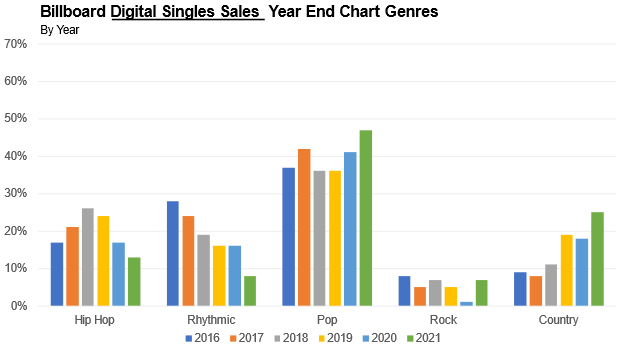
Who on earth still pays to own digital music? Increasingly, it’s Pop and Country fans and fewer Hip Hop fans.

Two very particular groups in 2021 put down cash to own their favorites.

  • Among the 75 biggest paid digital downloads were six different titles from K-pop megastars BTS, only one of which was among the 75 biggest songs on the radio or on streaming.
  • Also among the 75 biggest paid digital downloads were two different songs titled “Let’s Go Brandon,” the chant that organically became a substitute for Americans with a wish for the current President that is far less radio friendly. First, Loza Alexander’s version reached #2 on iTunes’s U.S. sales chart, then Bryson Gray hit #1 on iTunes. Neither song made streaming’s year-end chart.

The shift of Pop and Country and the decline of Hip Hop likely presumably stemmed from an aging consumer base for paid digital downloads, as younger music fans had already migrated to streaming.

However, strong sales of BTS and “Brandon” may also suggest that certain fans with a strong affinity for an artist or a song still wish to pay money to show their passion, loyalty, or support.

The lesson for radio: While music sales is already largely irrelevant to radio, purchasing music in the future may become a way of signaling passion for an artist, a song, or a cause.   

To learn other music trends that could shape the decade, check out How The Homelanders (a.k.a Gen Z) Will Soon Change Popular Music and How to Prepare Your Station to Appeal to a New Generation.


Should We Talk About Bruno?

Disney’s latest animated movie spawns a surprise and massive hit song


It blew up on TikTok. It hit #1 on every major streaming platform. It’s #4 on the Billboard Hot 100 (at the time of this post’s release) between Glass Animals and Ed Sheeran. The album from which it came bumped Adele’s 30 out of the top spot. It’s stuck in the heads of parents everywhere, most of whom aren’t even complaining about it.

About the only place you won’t hear it is your radio.

It’s time to talk about Bruno, specifically “We Don’t Talk About Bruno,” the surprise smash from Disney’s Encanto.


In this article:
·       The two mistakes radio makes about left-field songs
·       Why this song might be special
·       How to decide if Disney’s latest song belongs on your station

The song is already the biggest hit of the 21st century from a Disney animated film, surpassing Frozen’s “Let It Go”. It’s already matched the #4 Hot 100 chart peak of “Colors of the Wind” by Vanessa Williams (1995) and Elton John’s “Can You Feel The Love Tonight” (1994). Unlike these soft-rock stalwarts, however, “Bruno” hit #4 without any meaningful spins on FM radio.


Is “We Don’t Talk About Bruno” too big for radio to ignore?

There are two extreme philosophies relevant to this question. Both are big mistakes.

  • “If the numbers say it’s a hit, it’s a hit and we must play it.”
  • “It doesn’t matter how many people love it, if it doesn’t fit, it doesn’t fit”

To understand why these rigid mindsets lead to poor decisions, let’s examine two hits of the streaming era, including another Disney animated classic.

Mistake #1: The numbers say it’s a hit

Back in the day, Disney recruited big names to belt out movie ballads to garner radio airplay, from Elton John and Phil Collins to Celine Dion and Peabo Bryson. Disney has also tactically released two versions of songs, one featuring the voice actors in the film and the other from a big-name pop star designed to draw airplay. Frozen employed this tactic with both Idina Menzel and Demi Lovato recording “Let It Go”.

2014 broke that model.

Frozen was the first Disney animated blockbuster when audio and video streaming were widely available to preschoolers. Voting with their fingers, the kids made the Idina Menzel original—not the Demi Lovato remake—the hit version. “Let It Go” reached #5 on the Billboard Hot 100 and became the 21st biggest song of 2014, all without meaningful airplay.

A few Integr8 New Music Research clients did test Menzel’s “Let It Go” in 2014. Within their target demographics, they found some listeners loved it, some listeners hated it, and a lot of (presumably child-free) listeners said, “what the hell is this?”


How could such a massive hit bomb in callout?

First, the demographic that was most passionate about Frozen, 2- to 12-year-olds, aren’t in radio music research, but their YouTube and Spotify streams count just as much as any other user’s streams count.

Second, those fans who loved “Let It Go” really loved it—and played it over and over and over and over. (My kid was six during Frozen. Arendelle still haunts me.). Streaming doesn’t measure how many different listeners play a song, it measures how many plays a song gets. Ten people playing a song one time is the same as one person playing a song 10 times.

Therefore, despite the massive streaming metrics, radio was right to avoid Elsa’s ode to ice. Parents didn’t want to hear “Let It Go” on the radio. They listened to the radio to get away from “Let It Go.”

The lesson for radio? Just because a song has huge streaming numbers doesn’t mean it’s a huge hit among your listeners. A niche appeal song can rack up massive streaming plays, but radio needs songs that a massive segment of the audience enjoys.

Mistake #2: It doesn’t sound like it fits

Fast forward to 2019. A song blew up on a new video platform called TikTok. Then, the song saw massive streaming on Spotify. But when the song started charting on Billboard, radio wasn’t sure what to make of it. It was from an unknown Hip Hop artist, but the song was about being…a cowboy? It was barely two minutes long. It sampled Nine Inch Nails.

How was this song going to sound between “Havana” and “Perfect”?

It seems obvious now, but in March 2019, even Billboard didn’t know what to do with “Old Town Road,” notoriously banishing the track from its Hot Country Songs chart. Understandably, radio programmers were hesitant to trust that a viral Country Trap song would appeal to a mainstream audience. Hindsight told us they did. “Old Town Road” famously spent 19 record-breaking weeks at #1 and Lil Nas X has gone on to become a major hitmaker.

When Integr8 New Music Research clients tested “Old Town Road”, they found their research confirmed that most listeners already knew Old Town Road and, although it had its haters, far more listeners loved it.

Lil Nas X wasn’t alone. Lizzo’s “Truth Hurts” and “Bad Guy” from Billie Eilish both turned out to be mass-appeal hits, despite sounding starkly different than other hits and taking then non-traditional routes to becoming hits. Had radio stations eschewed these songs and stuck to what sounded safe, they would have been playing Taylor Swift songs that no longer garnered the appeal of her earlier hits.


It’s easy to spot hits when mothers and daughters agree on what’s big. But at times when a new generation is emerging with its own idea of what’s popular, CHR has often fallen into the trap of thinking the format is about Pop music, not popular music. That’s how Michael Bolton dominated early 90s radio.

But unlike Hip Hop or Country, listeners expect a Contemporary Hit Radio station to keep them up to speed on the biggest contemporary hits, regardless of the sonic foundation of the song.

The lesson for radio? If you’re a hit music station, a song fits if it’s a mass appeal hit. Playing it too safe today undermines listener’s expectations of a hit music station, namely keeping them up to date on today’s biggest hits. That sonic conservatism almost killed the entire CHR format in the early 1990s.

Which brings us back to Bruno.

Why “We Don’t Talk About Bruno” might be different than “Let It Go”

It’s not a ballad. It’s an upbeat song sung by the cast ensemble. Disney might be the most surprised of anyone by this break in tradition. They submitted “Dos Oruguitas” (“Two Caterpillars”) for the Grammy nomination and may well have expected it to be the film’s musical signature.

It’s musically intriguing and incurably catchy. Composed by Hamilton’s Lin-Manuel Miranda, “Bruno” incorporates elements of Columbian Cumbia and Hip Hop, as well as more hooks than in a single song from ABBA, making Bruno more musically complex and even more catchy than a typical Disney ditty.

It may have appeal beyond Disney’s core demo.  This question is the pivotal one for radio. My observations suggest that:

  • Teenagers love the entire soundtrack;
  • Parents are happy that they can share the musical talent Miranda brought to Hamilton without the inappropriate language;
  • Other parents happily sing along when their kids stream Encanto for the 87th time—and are delighted there’s a Disney soundtrack they don’t hate;
  • It’s huge among Disney’s adult fandom;
  • It has inspired TikToks, exposing the song to teens and child-free young adults.

The song may also be benefiting from lucky timing. Encanto wasn’t a massive hit in theaters when it debuted in November 2021 but has blossomed on Disney+. Between COVID outbreaks and winter weather, many schools and preschools have closed unexpectedly, leaving many parents trying to entertain their kids while also working from home. Encanto is entertaining those kids, while the parents are finding the soundtrack stuck in their heads and—for once—liking it.

Sometimes, timing is everything on why a song is relevant.

“We Don’t Talk About Bruno” is undoubtedly having a moment of popular cultural relevance. But radio?

How to decide

If you have access to new music research, test it. Has the song’s viral growth already made it as familiar as some of the newer songs from your core artists?  Do those listeners who know it love it?  Do they significantly outnumber any listeners who hate it?

In that case, play it—assuming you’re a CHR or Hot AC station.

It won’t go into your gold library. You should pull it as soon as it shows signs of losing its buzz or garnering backlash. But for the time it is relevant to a mass audience, it’s a hit.

If, however, most of your listeners don’t know the song, or if a lot of your listeners hate it, then you’ll know the song’s appeal is limited to a niche audience and the song is not a mass-appeal hit. You should not play it no matter how massive the streaming metrics look, nor should you try to make it a hit on your own as you would do with the new release from a proven core artist.

Herein lays the balance between the two extremes of approaching left field hits: CHR should not ignore a song simply because it doesn’t sound like the typical song on the station. At the same time, those songs need to prove themselves elsewhere before CHR explores adding them.

Radio is no longer the only medium where a song can become a hit. However, radio is the king of validating that a song is a hit.

POSTSCRIPT: I first learned of “We Don’t Talk About Bruno” from my 14-year-old, who long ago became too cool for Disney, but shared the song with me after hearing it from friends because our family’s orange tabby cat is named Bruno.

Unlike the Madrigal family, we talk about our Bruno. A Lot.

What Adele and AC/DC (Might) Have In Common

One of my favorite weekend pastimes is tuning in to classic American Top 40 countdown shows with Casey Kasem, which our local Classic Hits station rebroadcasts each weekend. My favorite part is hearing songs that vanished after they were currents. Even huge artists with hits people still play today had some big hits that only hard-core music geeks remember today.

There’s a lesson here for anyone who programs a contemporary station: Just because a song becomes a big hit rapidly doesn’t mean it’s going to stay a big hit, even if the song is by a huge artist.

Sometimes, especially if the song is by a huge artist.

In our last post, we examined why Adele’s album releases have become major press events that build her brand. Her first album 19 was slow to become big, as new fans organically discovered Adele one listener at a time (19 was never higher than #10 on the Billboard Hot 200 album chart in any given week.) Every subsequent album, however, instantly topped the album chart, as her fans flocked to hear her latest as soon as they could buy or stream it.

Both 21 and 25 ultimately became even bigger sales and streaming successes in the long run than their preceding albums. Is 30 destined to be even bigger than 25?

Maybe—but not necessarily.

Despite the first single “Easy On Me” already setting streaming records and gaining popularity unusually rapidly for our Integr8 New Music Research clients, the success Adele enjoys at this stage is still solely based on the excitement of having new material form Adele. (That’s only possible because she makes you wait so long for it.)

In other words, listeners are currently flocking to “Easy On Me” based on how much they loved “Hello”.

It’s a concept pop-chart analyst Chris Molanphy coined “The AC/DC Rule”

In his outstanding podcast for Slate Magazine Hit Parade, (seriously, if you’re not already a subscriber, go do that now), Molanphy observes that the initial success of a follow-up album is primarily based on how fans felt about the act’s previous album.

Just because an album debuts big, however, doesn’t mean it will stay big.

Molanphy specifically coined it the “AC/DC Rule” because of the strong initial sales of their 1981 album For Those About To Rock (We Salute You) after the sleeper success of Back In Black. For Those About To Rock reached #1 on the album charts in only three weeks and remains the band’s only #1 album.

If you were programming an AOR station in 1981, no one could blame you for thinking AC/DC had released an instant classic. However, For Those About To Rock (We Salute You) fell off the album charts after only seven months. Unless you’re a hard-core hard rock fan, you probably can’t sing a single song on the album.


In contrast, Back In Black, which only peaked at #4, has become one of the best-selling albums of all time, and is still on Billboard’s album chart.

By “is”, I mean today. In 2021.

The week of this post, AC/DC’s 1980 release outsold and outstreamed The Weeknd, Bad Bunny, and Drake.

Molanphy didn’t call his theorem “The Adele Rule” because 25 and 21 were both bigger than their predecessors.

So what does AC/DC have to do with whether or not you power Adele?


If Adele is relevant to your format, you should most certainly play “Easy On Me” in significant rotation right now. Regardless of how long listeners ultimately want to hear it, your audience wants to hear it today simply because it’s buzzworthy.

However, whether or not listeners want to continue to hear “Easy On Me” and subsequent singles from 30 will ultimately depend on how listeners judge the songs themselves.

Remember Taylor Swift’s “ME!”? It was the most-streamed song in the U.S. when it dropped. Radio rushed to add it. However, it quickly tanked in streaming and in callout research as listeners realized they simply didn’t like “ME!”


Unfortunately, many stations kept “ME!” in rotation weeks after listeners had panned it—presumably because it of the song’s initial success and the belief that Taylor Swift doesn’t have stiffs.

Carefully examine your new music research and other metrics you use to gauge current music to determine if “Easy On Me” will ultimately be another enduring smash like “Hello” or will be Adele’s equivalent of “ME!”

Regardless of the long-term fate of “Easy On Me,” there is one other thing that AC/DC and Adele have in common: Consistency. Remember how AC/DC reacted to Grunge?

They didn’t.


Three Branding Concepts You Can Steal from Adele

Like large sunglasses and the McRib, Adele has once again returned. Her new album “30” drops on November 19th. The first single, “Easy On Me”, is already breaking records:

  • On Spotify, the song debuted as the #1 most-streamed song in the U.S. for the week, with over 20 million streams—more than twice as many plays as Spotify’s #2 song.
  • It also leaped to Pandora’s #1 most-streamed song in the U.S. in its first week
  • On Amazon Music, “Easy On Me” debuted at #2 (behind everybody’s favorite Applebee’s commercial).
  • With the combination of strong streaming and substantial radio airplay, “Easy On Me” jumped to #1 on the Billboard Hot 100 in its 2nd The song debuted at #68—based solely on five hours of streaming availability.


Songs debut atop streaming service charts all the time nowadays, as Drake can attest. When an artist drops a new project, their core fans flood Spotify to check out their latest project. “Check out” means playing newly released tracks over and over and over.

Since streaming charts measure how many times users play a song, not how many different users play it, a relatively small but rabid fan base can push an artist’s work to #1 when it drops.

What Adele did with “Easy On Me” is much bigger.

Integr8 New Music Research (as callout research has always done) measures the familiarity and appeal of songs among a specific radio station’s weekly Cume audience. That’s a far more complete sample of listeners than any one artist’s core fans. A typical Top 10 Pop hit will take eight weeks for listeners to notice a song, become familiar with it, and grow to love it enough to make it among a station’s most appealing songs.

Adele’s “Easy On Me” was #1 in its very first week among many Integr8 New Music Research clients testing it. For others, it debuted among the top 10 most appealing songs—a feat she also achieved in 2015 with “Hello.”


So how does Adele achieve instant appeal with her new releases?

1)  Scarcity: “30” is only Adele’s 4th studio album since 2008. As her fame grows, she makes fans wait even longer for her next album. It’s been six years since “25” debuted, her longest gap yet between album releases. It’s simply human nature to anticipate something more when you perceive that you don’t get it very often—as witnessed by expatriated Californians visiting In-and-Out Burger within minutes of return visits to the Golden State.

2) Publicity: Whether you care about her or not, you know when Adele’s about to drop a new project. Her releases receive extensive news coverage alongside world events and COVID statistics. So, when you hear Adele’s latest single on the radio for the first time, you think, “Oh, this is the new Adele!”In contrast, when the average listener hears the other 99% of new songs for the first time, her reaction is, “what is this weirdness? Never heard it.” It will take eight weeks of steady exposure for her to decide if she likes a typically developing new song, but Adele’s pre-publicity encourages listeners to actively listen and get to know the song immediately.

Adele would never receive this level of free publicity if her new releases weren’t rare events. (See #1 above.) CBS News doesn’t break in whenever a new project drops from Drake.

3) Consistency: Back when “21” spawned three #1 hits, a major market Hot AC programmer quipped, “If Adele finds a new boyfriend, our whole format is screwed.”

Just as Taylor Swift’s discography is a relationship pattern in need of DBT therapy and Olivia Rodrigo has an entire album exploring the five stages of breakup grief, Adele’s songs address a similarly consistent theme of examining life and romantic relationships form the perspective of her current age. Even her album titles—all of which reflect her current age—reinforce her brand.

Creative people often get bored and want to try new things, sometimes moving too quickly for their core fans. (Looking at you, U2). Rare is the artist that understands their own brand. The ones who do are known by their first name.


Historically, Adele has delivered on the high expectations for her debuts. But hype doesn’t always translate into hits. We’ll tackle what’s next for “Easy On Me” and other singles from “30” in our next post.

In the meantime, do you have ideas on how radio brands could effectively exploit the branding principles of scarcity, publicity, and consistency? Share your ideas in the comments.

How should you use individual streaming service charts?

Our 3rd post in our 3-part series exploring differences in the most popular songs on streaming platforms.

In our post examining a snapshot of the Top 20 songs on each of the five major streaming music services and in our review of Coleman Insights’ Contemporary Music SuperStudy3 data, we clearly saw differences in music tastes emerge among each service, namely:

  • Country is huge among Amazon Music users, as are several timeless Classic Rock titles.
  • Country is also big among Pandora users, but Pandora artificially removes titles from their charts after 17 to 24 weeks.
  • Hip Hop dominates the most popular songs among Apple Music users.
  • Hip Hop is also huge among YouTube music video viewers. Novelty songs are also popular on YouTube.
  • Pop hits are big among Spotify users. Spotify listeners also use the service like a record store, streaming many tracks from new releases from favorite artists.

Most Popular Genres on Streaming Platforms

What do our findings mean for how you can most effectively use streaming data to pick the right contemporary music for your radio station? Here are five takeaways:

1) If you program a Country station, examine Amazon Music for the biggest Country hits and Pandora’s chart for the biggest up and coming songs. Whether it’s these services’ relatively older user bases or that both services have actively courted Country fans, Country programmers will find more of their P1s on these two services. Amazon Music tends to favor established Country hits, while Pandora’s artificial pruning of established titles means their charts will reflect the biggest up-and-coming titles.

2) If you program a Hip Hop station, examine Apple Music and YouTube. Both services have a higher percentage of pure Hip Hop fans than do other services. Historically, Hip Hop has also been huge on Spotify. Although Spotify’s most streamed songs are becoming more mainstream, the service remains a good place to see which Hip Hop titles are hot and have the potential to appeal beyond core Hip Hop fans.

3) If you program a CHR station, examine all these services—and look for consensus.  As Spotify solidifies its position as the leading on-demand streaming service, its most streamed songs are increasingly representing mainstream tastes. The true measure of a mainstream hit, however, is how broad that song’s appeal is. By checking how a song is performing on multiple streaming services, you can see which songs have the universal appeal that makes a pop song a smash.

4) Look for those songs listeners stream week after week.  Especially on Spotify and Apple Music, fans come to sample all the tracks from the latest releases from their favorite artists. While artists such as Drake, Ariana Grande, Migos, and Oliva Rodrigo have all dominated the Top 10 on Spotify or Apple Music for a week or two, the real hits from a new album will be those tracks listeners keep streaming week after week as a broader fan base discovers those songs. As a radio programmer needing to attract an audience beyond one artist’s core fans, it is important to look beyond what might be huge this week, and instead keep track of which songs listeners keep streaming week after week. Those songs are the real hits for your station.

5) Don’t judge the appeal of your format based on what’s streaming. If you don’t have the benefit of recent strategic perceptual research, you understandably want to gauge if the appeal for your format’s music is growing or waning. Are your ratings down because the format is less popular, or because of how you’re executing it?

Unfortunately, there are too many variables in who is using each streaming service to use their charts to judge your format.

For example, Country titles became more popular on Spotify at a time when the format’s ratings were down. Was Country music in general becoming more popular? Was Spotify’s user base expanding to include more Country fans? Or was that growth largely fueled by Morgan Wallen, an infamously famous artist appealing to younger listeners?

There’s one final thing to always keep in mind when using streaming data to pick current titles for your station:

In streaming, we’re examining song plays, not how many people like a song. Whether you’re examining an individual streaming service’s chart or aggregated streaming information on MRC Data’s BDS Radio or Alpha Data Music Charts, you are seeing how many total times users played a song. You are not seeing how many different people like that song.

In contrast, every other resource you’ve likely used to examine music appeal, from callout research to digital download sales, does measure the number of different people who like a song.

10 People Stream Once vs. One Streamer plays 10 times

The distinction is important. Radio stations win by playing those songs that appeal to the most possible listeners within the format.

Occasionally, a song emerges among the most-streamed songs that’s obviously fueled by a small number of small listeners playing a song repeatedly.

And yes, we do mean “small listeners.”


While Idina Menzel’s “Let it Go” and Pingfong”s “Baby Shark” are huge on streaming thanks to toddlers with an excruciatingly high tolerance for repetition, the distinction is less obvious for songs that might appeal to teens and young adults who devote more time than do listeners 25 and older.

Until streaming services choose to publicly release information regarding the number of distinct individual users who play a song, programmers will need to evaluate the likelihood a song’s stream count stems from repeat plays more so than widespread appeal.

For more guidance on how to use streaming data to pick the right now music, check out our series How Streaming Data Can Help Radio Pick New Music.

How to access charts for major music streaming services
Spotify Logo https://spotifycharts.com/regional
https://music.apple.com/browse/top-charts
Amazon Music https://music.amazon.com/popular/songs
Pandora Logo https://www.nextbigsound.com/charts/top-spins
YouTube Logo https://charts.youtube.com